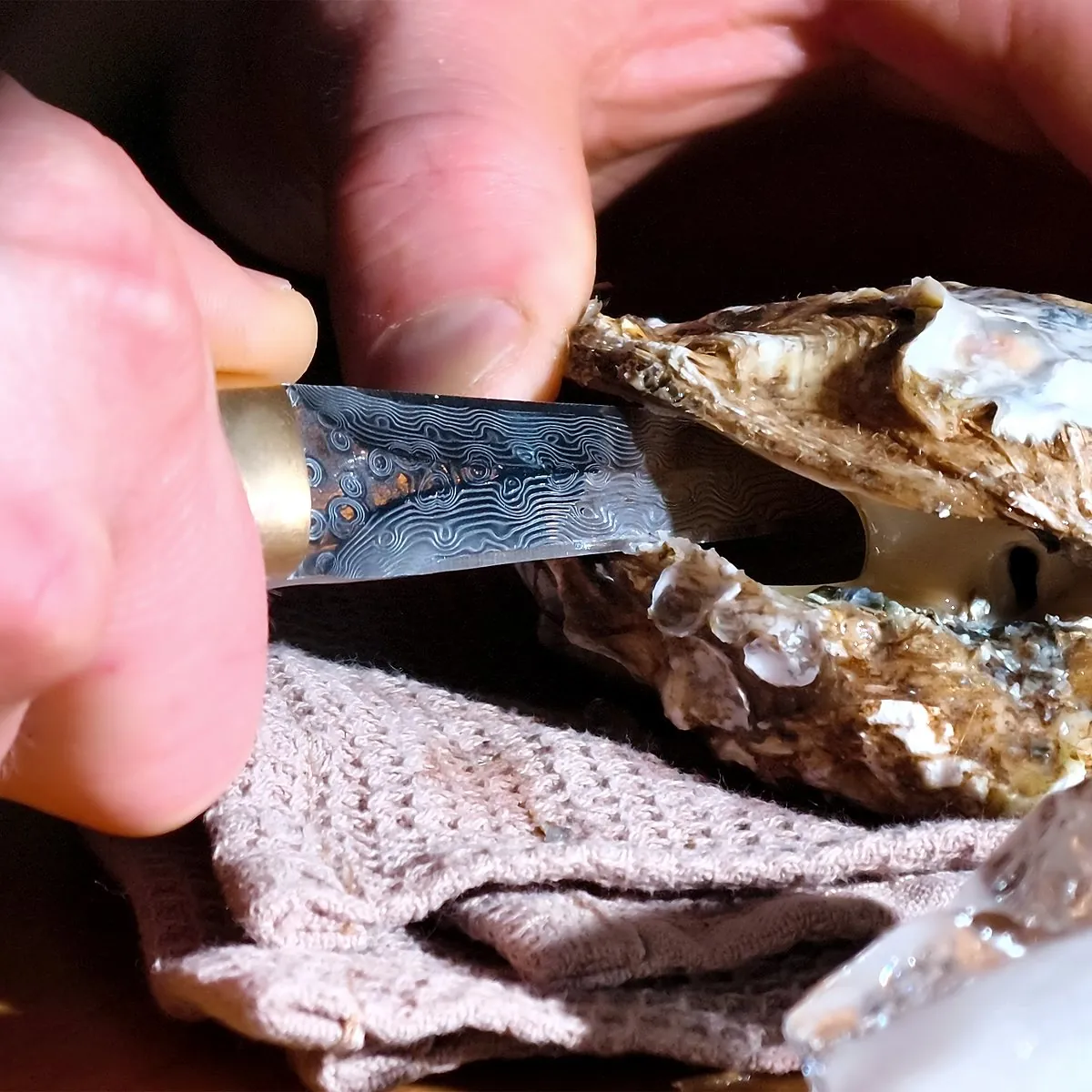
Damascusoyster knife with ebony handle
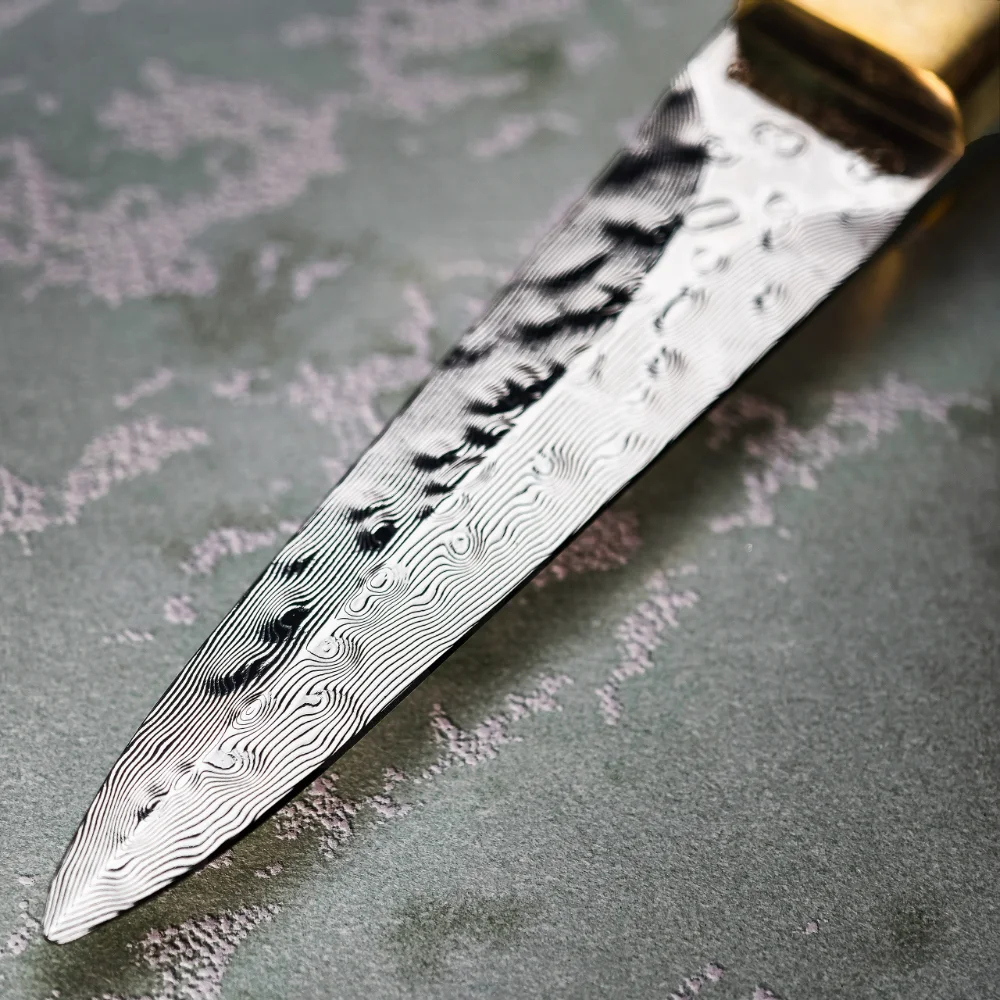
Coreless Damascus, ground from four sides: a slim point for the hinge, with steel kept along the centre.
Made to last a lifetime. Designed in Denmark by Jacob Bech and Shanru Lin.
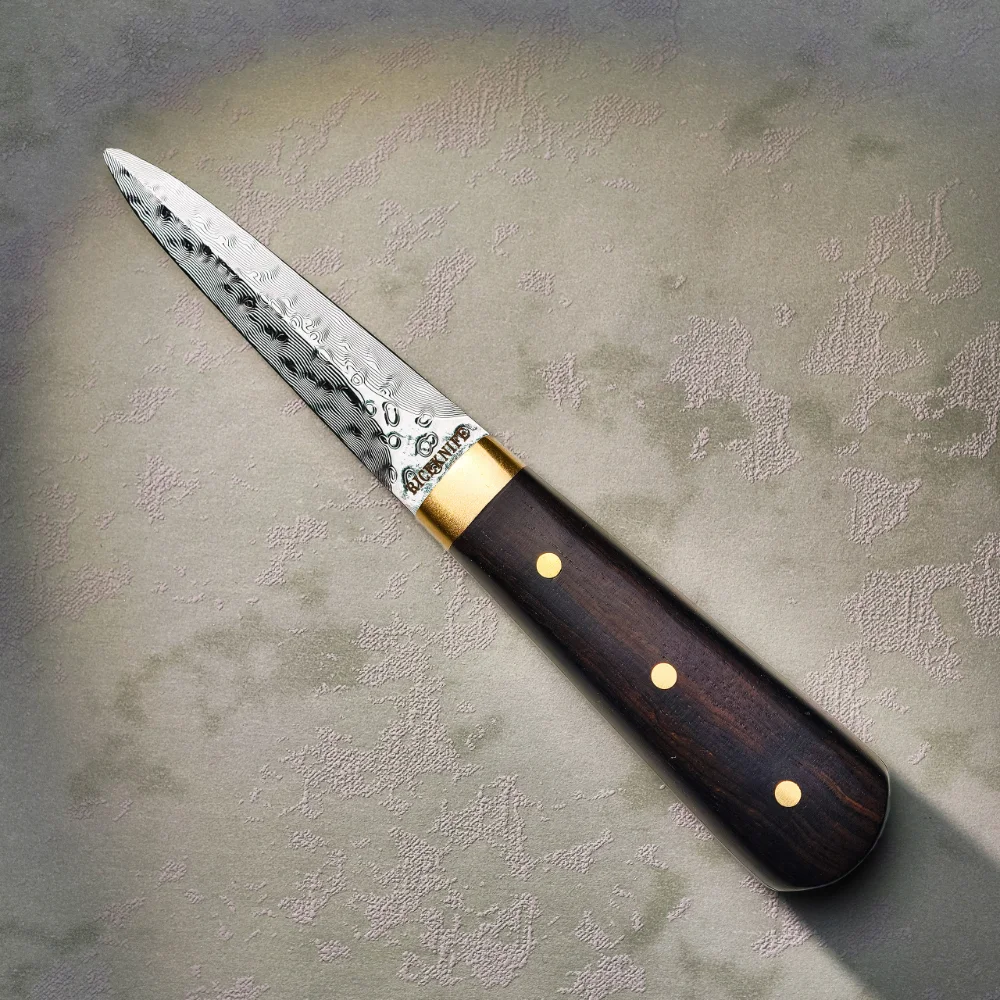
Three moves.
One oyster.
Scroll slowly to play each step, or tap a step to jump to it.
- 1
Find the hinge.
Hold the oyster in a folded towel on a stable surface. Set the slim point into the hinge.
- 2
Twist with control.
A short, controlled twist. If the point loses its grip, stop and reposition rather than pushing harder.
- 3
Cut the muscle free.
Run the blade along the inside of the top shell to cut the muscle holding the lid closed. Then lift off the lid.
Watch Jacob
open one.
Two short films from Jacob's YouTube channel. Why he made this knife, and how he opens an oyster with it.
YouTube only loads when you press play.
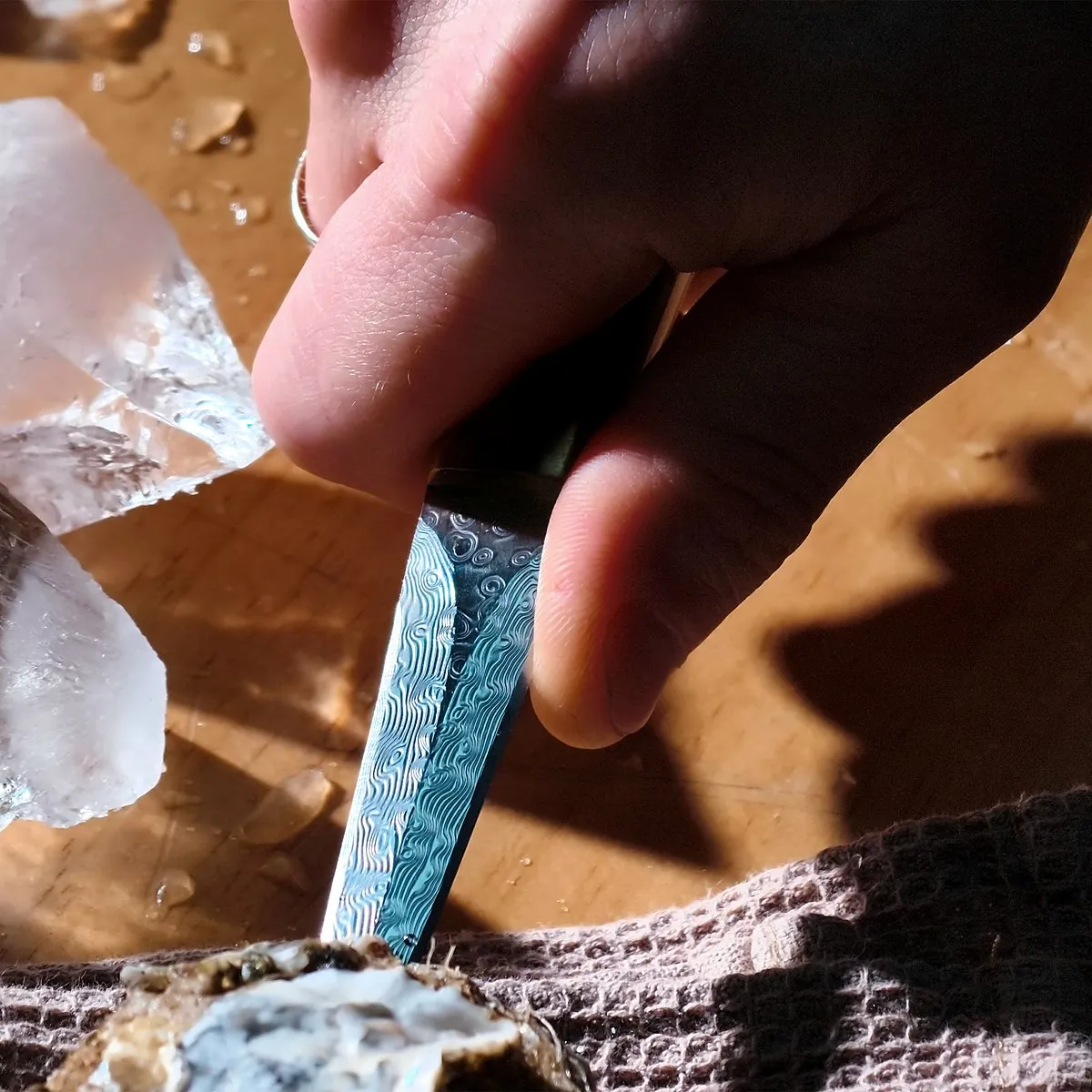
“They were simply too thin behind the tip.”
Jacob Bech saw oyster knives break while he was training as a chef at Bistro Bohème in Copenhagen. When he began making knives, he went back to that problem. His answer: a knife ground “like a medieval sword, from four sides instead of two”.
A slim point,
steel behind it.
The Damascus blade is ground from four sides and narrows towards the point, while material stays along the centre. Four faces do not mean four cutting edges. The grind describes the shape of the blade and where its steel sits.
Coreless Damascus means layered steel without a separate cutting core. The pattern shows how the layered steel looks; it does not, on its own, tell you how much force the knife can take. For Jacob, an oyster knife is about geometry more than slicing sharpness.
The diagram shows the principle. It is not a measured cross-section.
Up close.
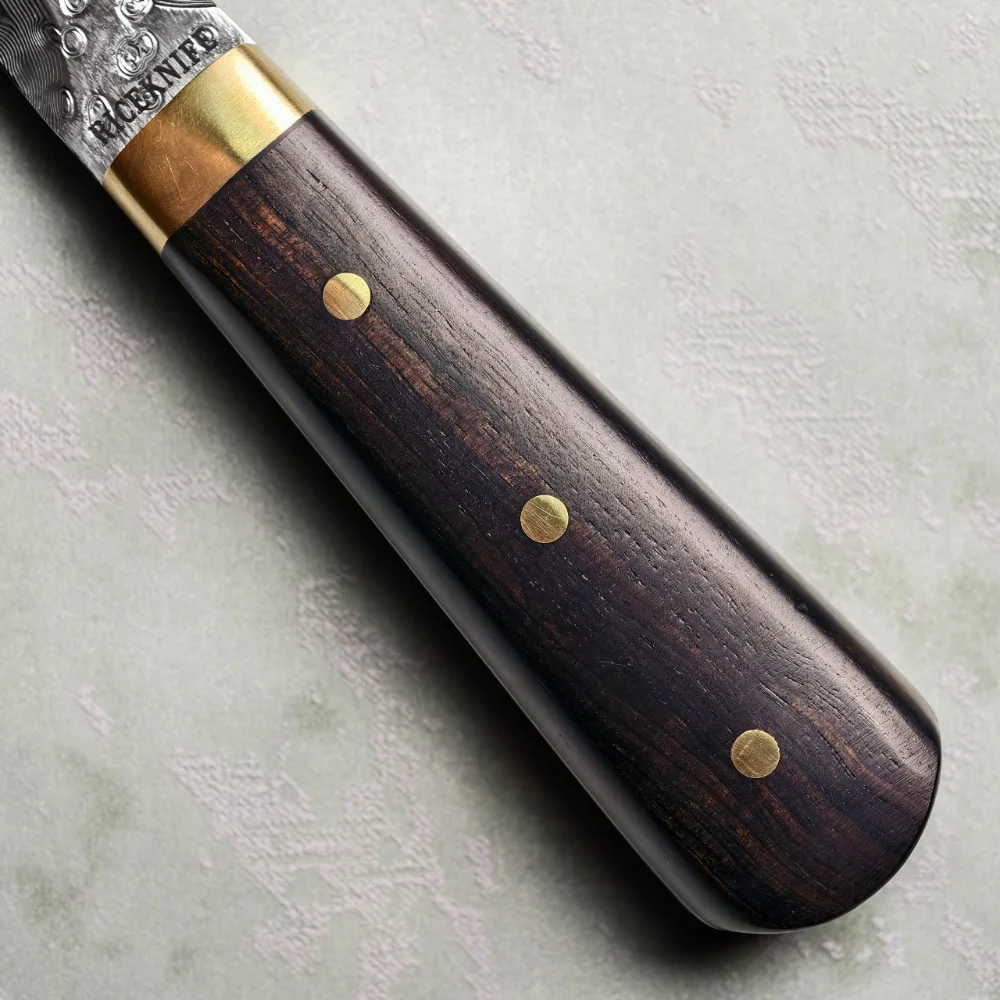
Same Damascus blade.
Other woods.
Apart from the wood, the three knives are the same. Each handle is natural wood, so the one you receive will differ a little from the photos.
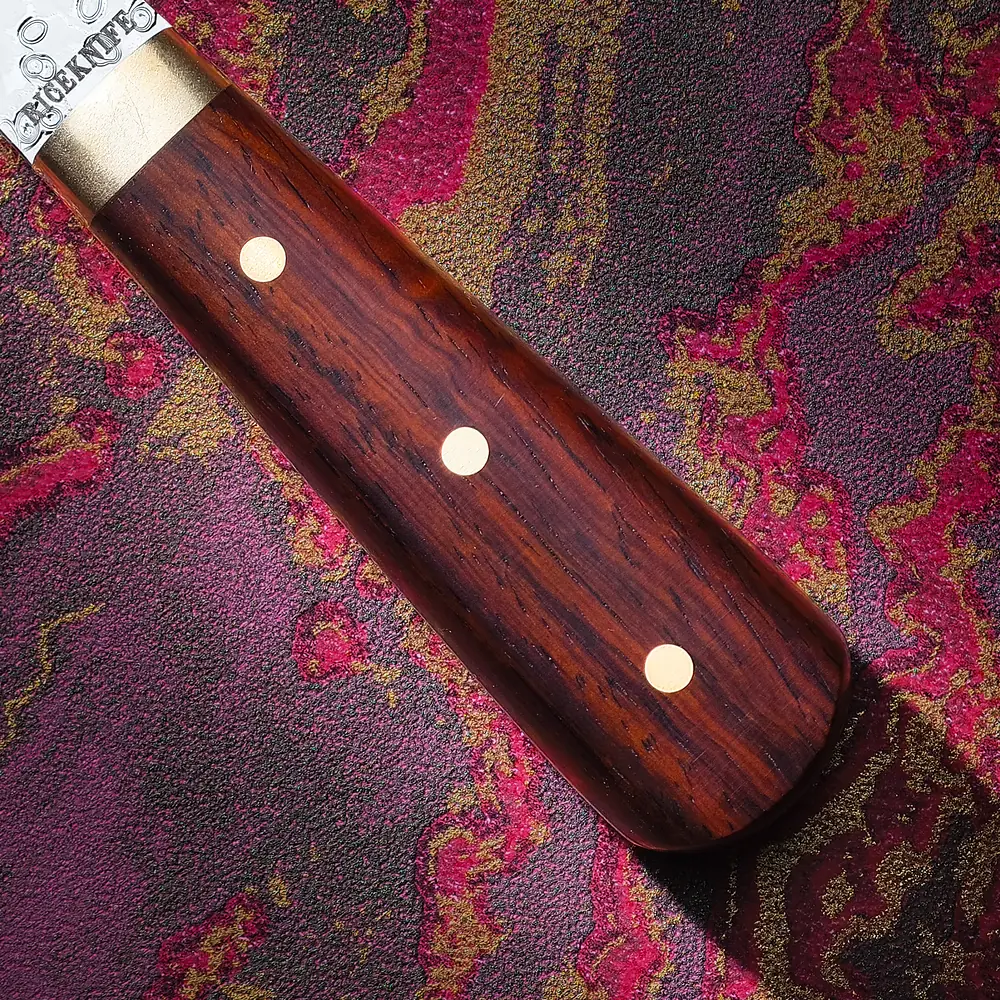
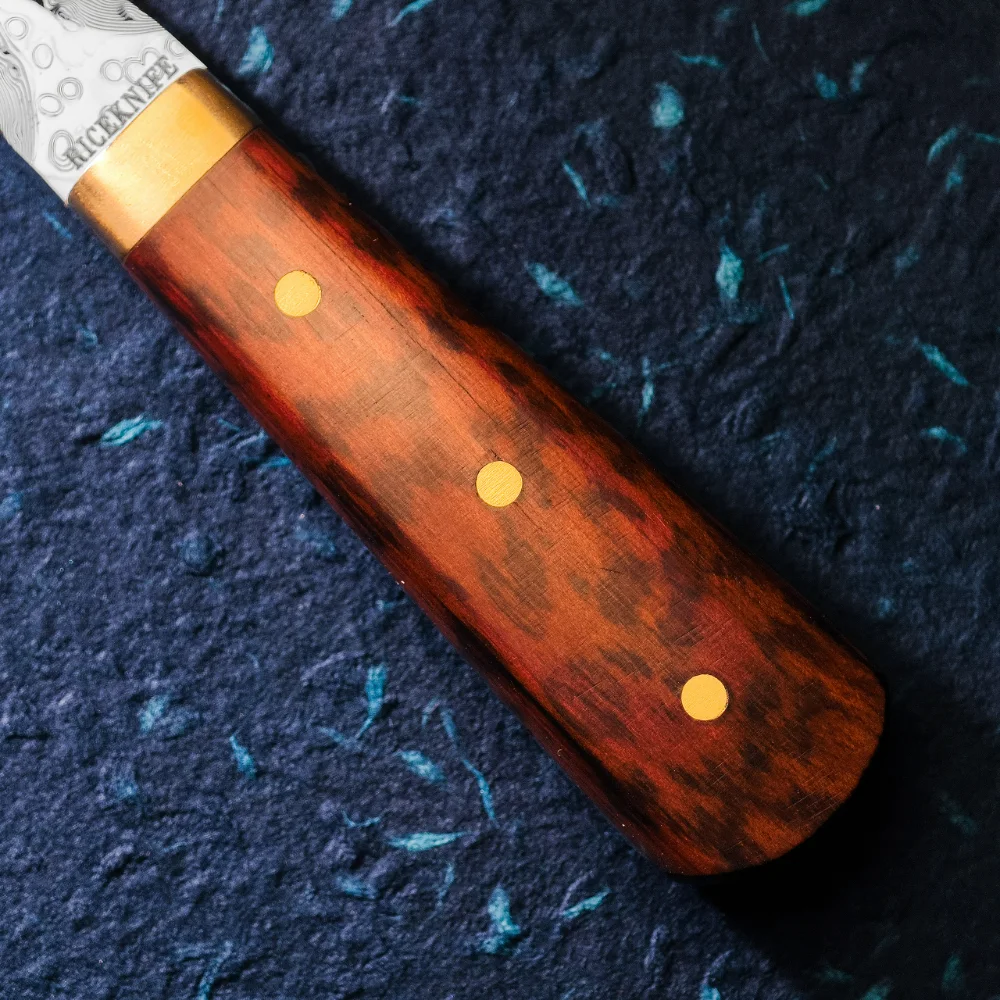
The details.
- Blade
- Coreless Damascus, four-sided grind
- Blade length
- 73 mm
- Handle length
- 87 mm
- Overall length
- 160 mm
- Weight
- 109 g, without packaging
- Handle
- Ebony
- Included
- One oyster knife with a paper sheath, in a box
- Design
- Jacob Bech and Shanru Lin, Denmark
Care
Wash by hand and dry the blade and handle straight away. No dishwasher, no soaking. Store it dry with the point protected. Ask us before you sharpen it or treat the handle.
Will my handle look like the photos?
Close, not identical. Natural wood varies from handle to handle in shade and pattern.
Does the Damascus pattern show how strong it is?
No. The pattern shows how the layered steel looks, not how much force the knife can take. Use it only for opening oysters.
Can I use it for other shellfish?
It is made for opening oysters and releasing the meat. Keep a kitchen knife for ordinary food preparation, and ask us before using this one on anything else.
What if it is not right for me?
You can return it within 100 days, for any reason. If it is faulty, we pay the return postage; if you change your mind, you pay it. Read our returns policy.
Does “Made to last a lifetime” mean a lifetime warranty?
No. It describes what we design for: a knife that keeps working for many years. Your legal rights as a consumer apply as usual.
Can I ask Jacob first?
Yes. WhatsApp +45 20 46 46 90 or [email protected]. Jacob reads and answers enquiries himself, usually within about two hours.
All 20 reviews of riceknife.com on Trustpilot are five stars (checked 10 October 2026). They are reviews of our shop and service.