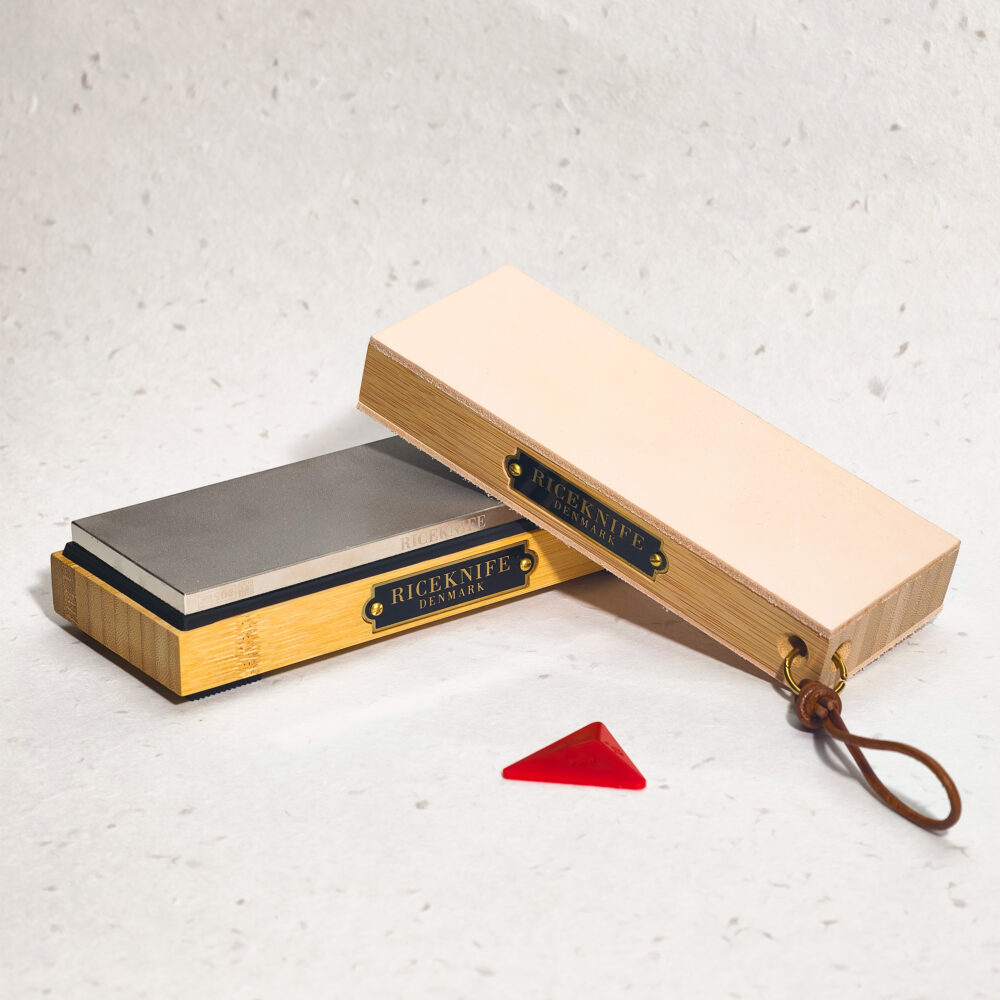
Your first stones
Sharpening Set · Beginner
Everything you need and nothing you don't. The technique explained from zero.
View set
Wash it by hand, dry it straight away, cut on wood, and keep the edge up with a strop and a diamond stone. That is the whole routine. Below is how Jacob does it in the workshop in Greve, and the stones he uses.
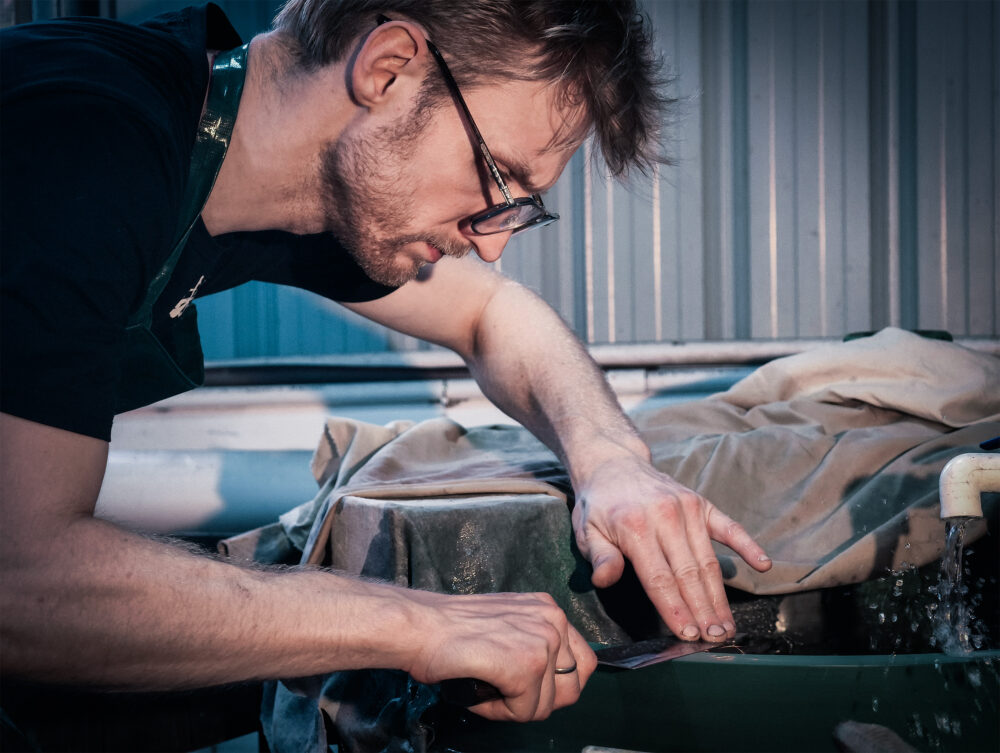
Stainless steel is not no-stain steel. Most damage to a good knife happens at the sink, not on the board.
Warm water and a drop of mild soap, right after cooking. Wipe from spine to edge, never along the edge.
Do not let it air-dry on the rack. Water left on the blade and the handle is where spots and cracks start.
Heat, salt and long soaking hurt both the steel and the wooden handle. Do not leave the knife lying in the sink either.
Lemon, tomato and onion slowly etch the edge. A quick wipe on a kitchen towel while you work is enough.
End-grain oak is kindest to the edge. Glass, marble, stone and ceramic plates dull a knife in a few strokes.
A magnetic rack, a block or a blade guard. Loose in a drawer, the edge chips against other metal.
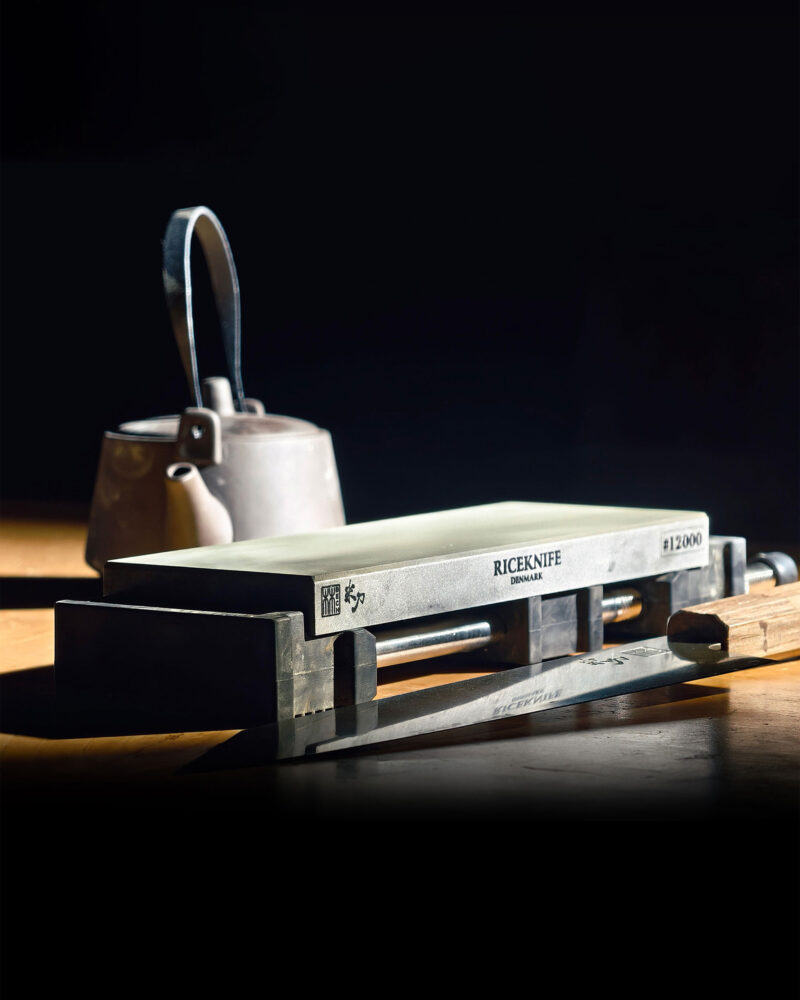
Twenty years of water stones, natural stones, ceramics and jigs came down to this. Diamond cuts hard steel fast and stays flat, so the stones never need flattening or soaking.
The angle. Jacob shows how to find it and hold it in the beginner video, with no guide or jig. After a few weeks of ten minutes a day, your hands remember it.
Pick the set for how often you cook, not for how good you think you are. Every set comes with Jacob's video.
How often do you cook?
Everything you need and nothing you don't. The technique explained from zero.
View set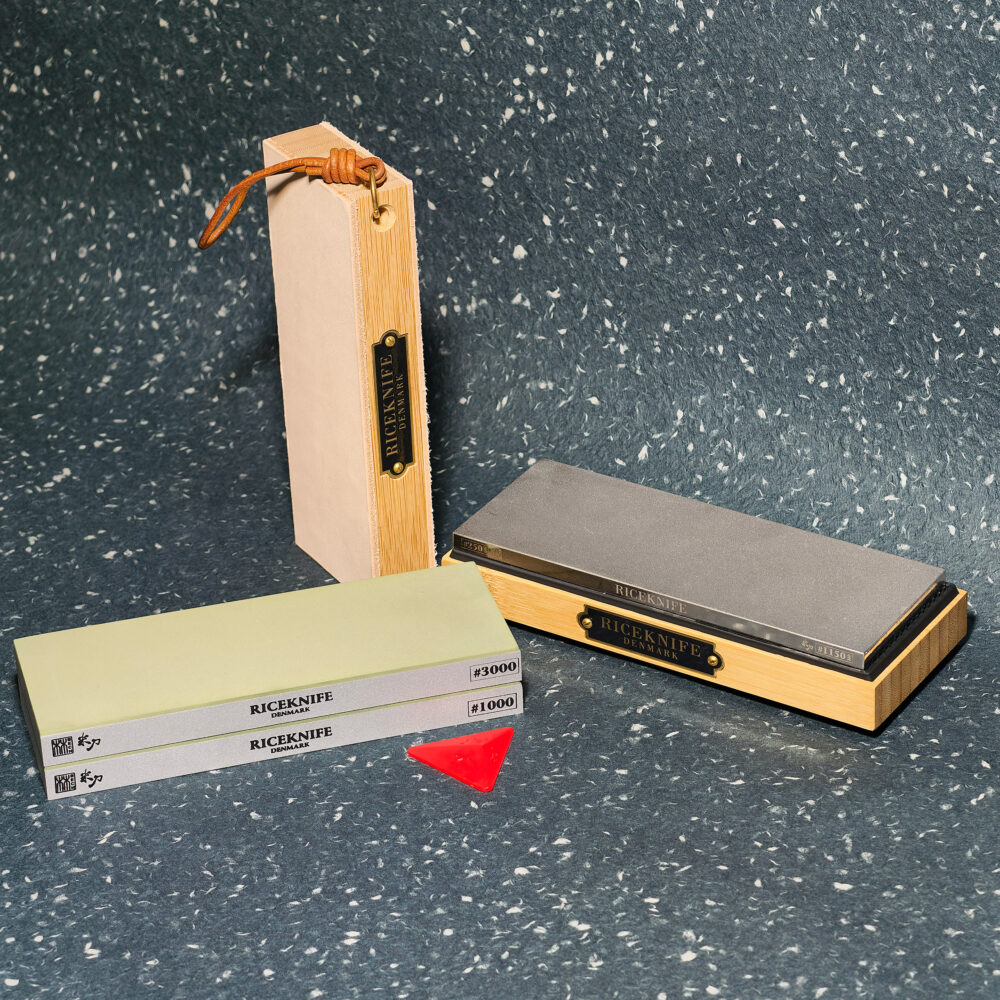
For getting the edge back in under five minutes, every time.
View set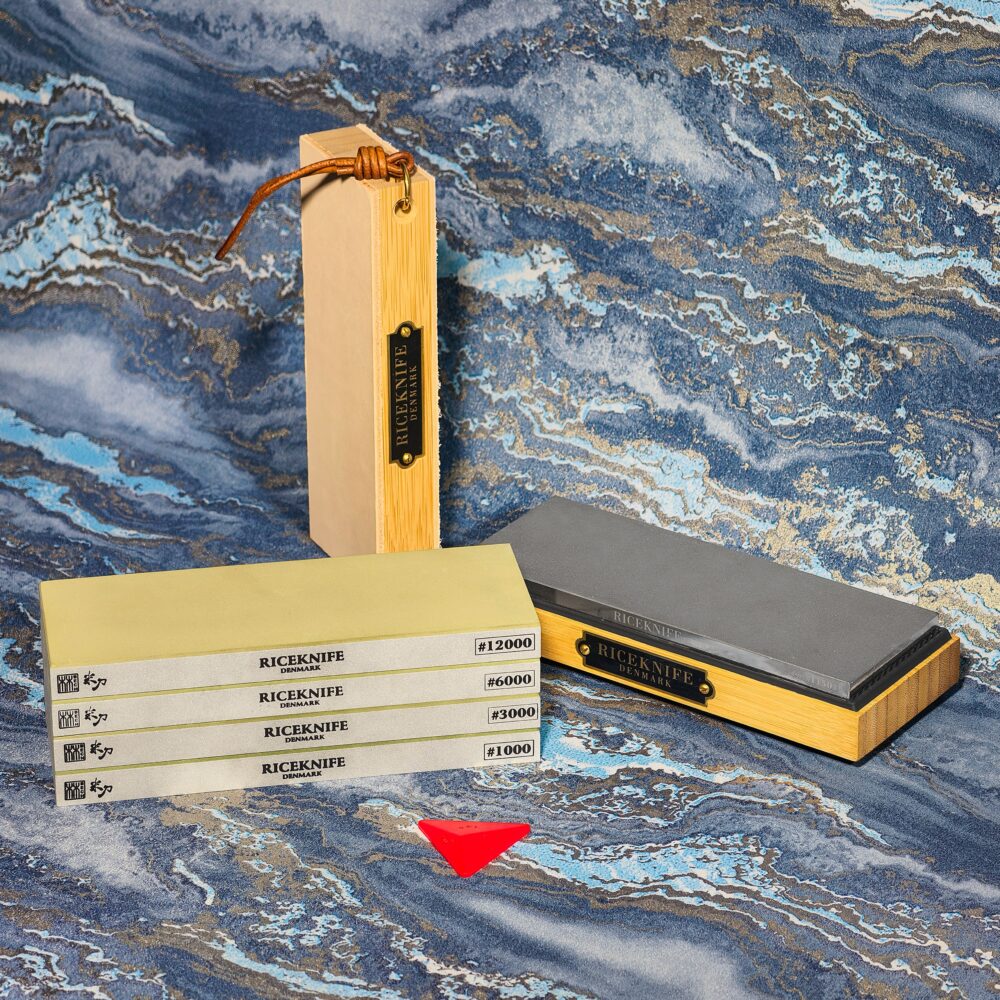
The full system Jacob uses, from coarse repair to a razor edge on the strop.
View set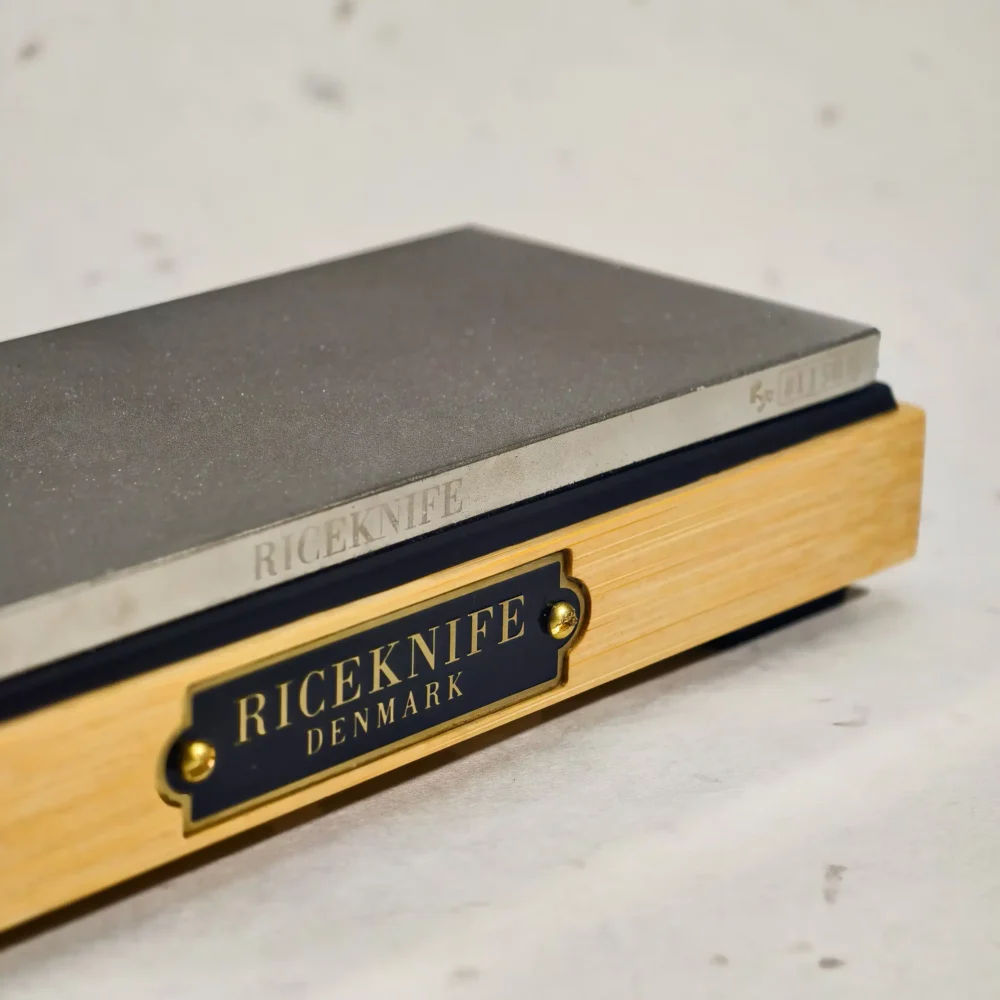
Two sides: 250 grit for repair and chips, 1150 grit to set a clean edge. Stays flat for years.
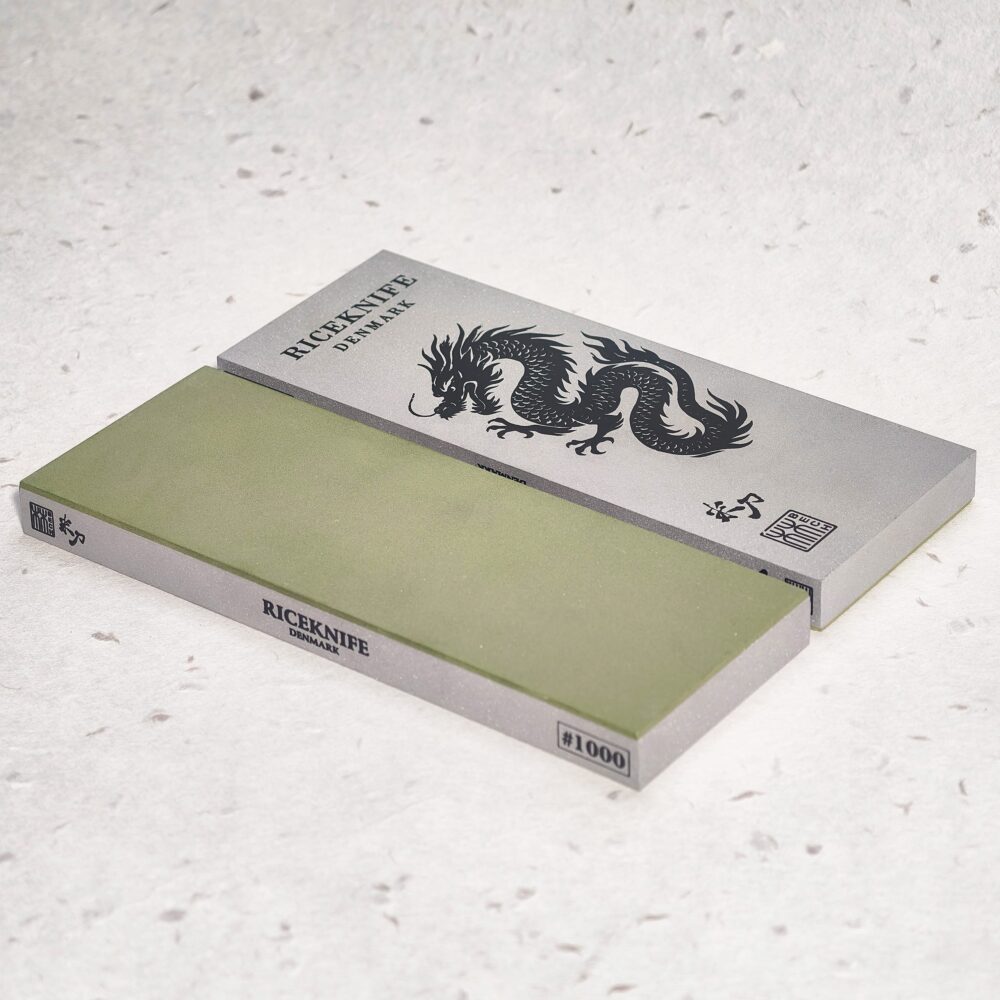
A finer edge than any water stone Jacob has used.
Never soak a wooden handle. If it starts to feel rough after a few months, sand it lightly with 1500 grit paper to lay the raised fibres down, then rub in a thin layer of beeswax and food-grade mineral oil.
Jacob cuts on end-grain oak. The fibres stand up, so the edge slips between them instead of hitting them. Oak is not too hard and is lightly acidic, which helps keep it clean.
See the cutting boardsStainless steel resists rust, it does not make it impossible. Spots usually come from water or acidic food left on the blade, most often near the edge. Rub them off with a little soap and a soft cloth, dry the knife, and they rarely come back.
Yes. Only the core steel touches the stone; the Damascus layers sit above the edge. Our EX-ANIMO knives have a VG10 core at 62 HRC, which is exactly what diamond stones are made for.
Water stones are pleasant and slow, and they dish, so they need flattening. Plated diamond stones cut hard steel fast and stay flat; resin-bonded diamond gives the fine edge. That is why every set here is diamond.
It is the difference between sharp and razor sharp, and it keeps you off the stones between sessions. Jacob ends every sharpening on the strop.
You can, once or twice a year. But a knife is only as sharp as the last person who sharpened it, and a few weeks of ten minutes a day is enough to do it yourself, whenever the knife needs it.
A thin layer of neutral oil after drying helps if the knife will sit unused for a while. Use a paper towel, lay the knife flat, and keep away from the edge.

Send Jacob a photo of your knife and he will tell you what it needs. Near Copenhagen? He also teaches private sharpening lessons in the workshop in Greve.
WhatsApp +45 20 46 46 90 · [email protected]
Join Waitlist
We will inform you when the product arrives in stock.
Please leave your valid email address below.