
Scandinavian design
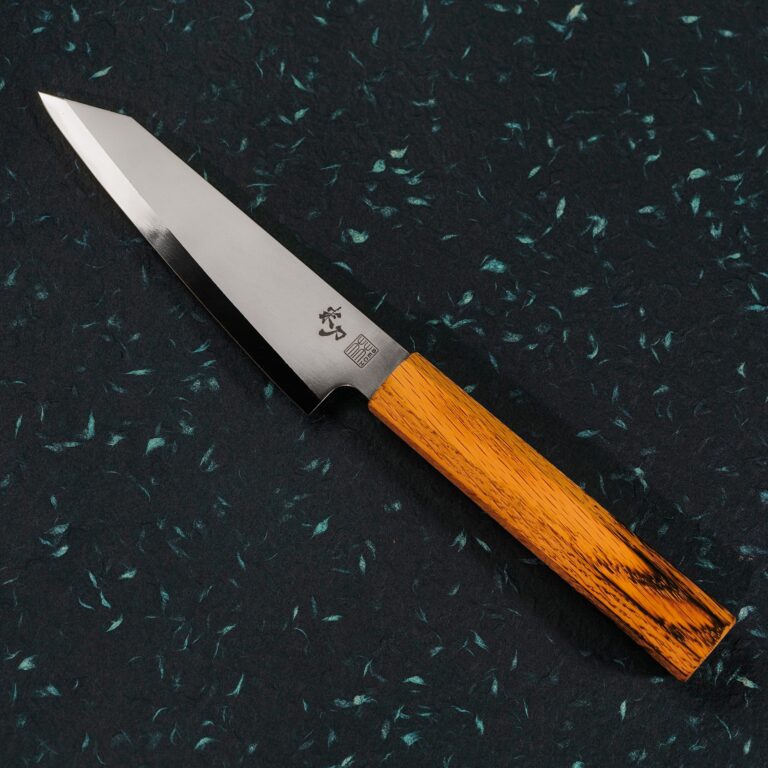
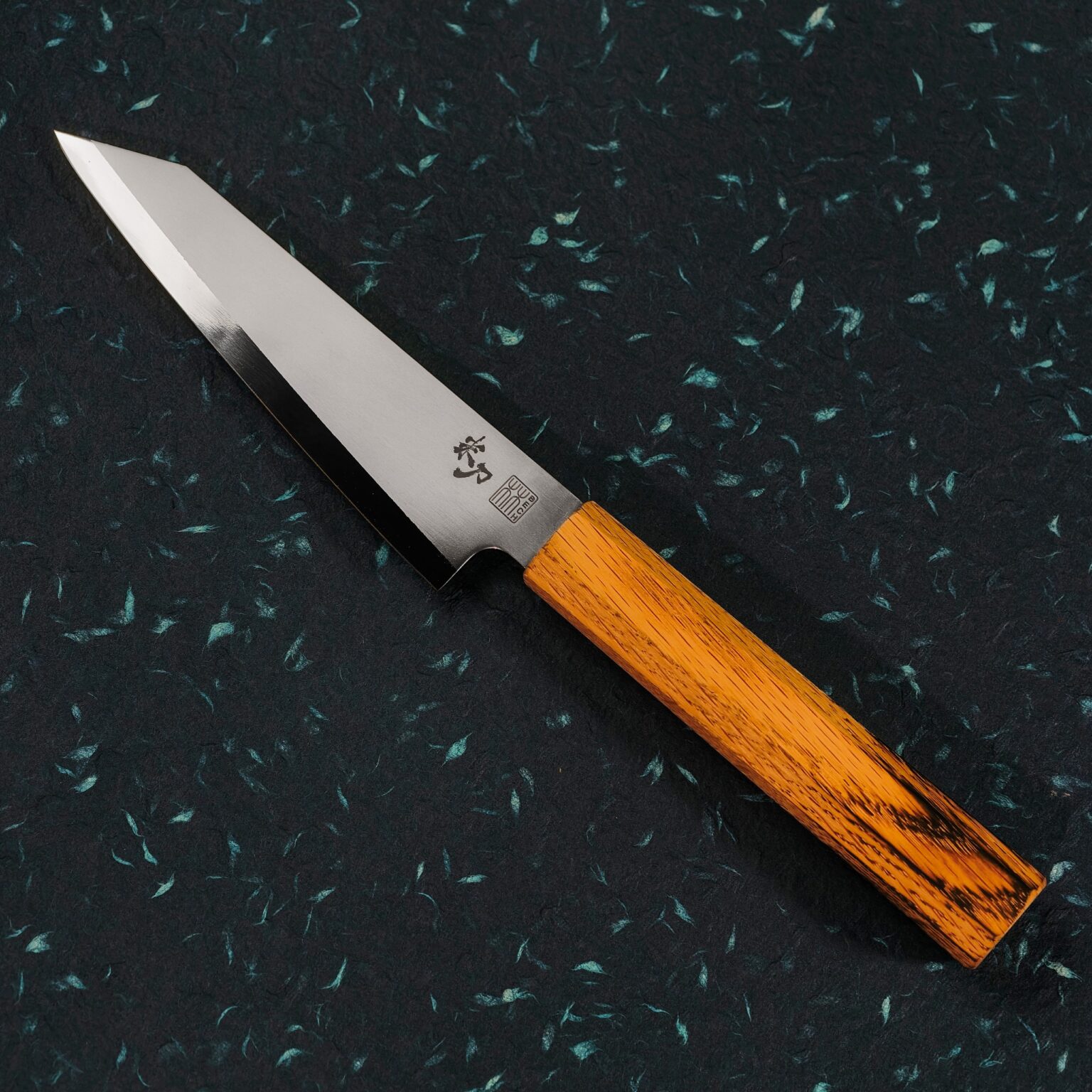
RAW OAK FREYA
Utility knife · 135 mm
- 61 HRC
- 65 g
- 100-day returns
Arrives sharp. Jacob checks the blade and edge of every knife before it ships. Designed by Danish chef Jacob Bech and Creative Director Shanru Lin.
Is FREYA right for you?FREYA
in short.
Use it for
- Fruit: halve, peel and slice
- Shallots, garlic and mushrooms
- Herbs and small amounts of vegetables
- Small pieces of boneless meat
Not for
- Bones and frozen food
- Large vegetables like cabbage and squash. That is ODIN’s or FRIGG’s job
- Bread. That is TYR’s job
- Twisting through stones in fruit
Is FREYA the
right knife for you?
Freya had a cloak of falcon feathers that let her fly lightly over the world. Answer two questions and we will show you the knife that fits what you cut.
1 of 2 · What will you use the knife for?
2 of 2 · Will the knife also cut bones or frozen food?
FREYA suits what you want to cut.
- FREYA has the thinnest blade in RAW OAK, so it meets very little resistance when cutting.
- 135 mm is long enough for the board and short enough for work in the hand.
- At 65 g, FREYA feels light in the hand.
Arrives sharp. 100-day returns.
FREYA is easy to control.
- 65 g and a 135 mm blade.
- The thin blade needs very little force to cut.
- For small amounts of vegetables, fruit and herbs.
Arrives sharp. 100-day returns.
ODIN is probably the better fit.
ODIN is a chef’s knife with a 245 mm blade for large vegetables, fish and boneless meat. ODIN and FREYA work well together: the big knife for the main work, the small one for the rest.
See ODIN · €114Prefer FREYA? Add FREYA to cart
For bread: see TYR.
TYR is a bread knife with a serrated blade. For bread, TYR is a better choice than FREYA.
See TYR · €107Prefer FREYA? Add FREYA to cart
FREYA is not made for bones or frozen food.
The blade is very thin, and bones, frozen food and fruit stones can chip the edge. For fruit, herbs and small jobs, FREYA is a good choice.
Freya is the Norse goddess of love and beauty. With her cloak of falcon feathers she could fly wherever she wished. Even Loki borrowed it when he needed to move fast.
 The blade
 The markThe whole knife
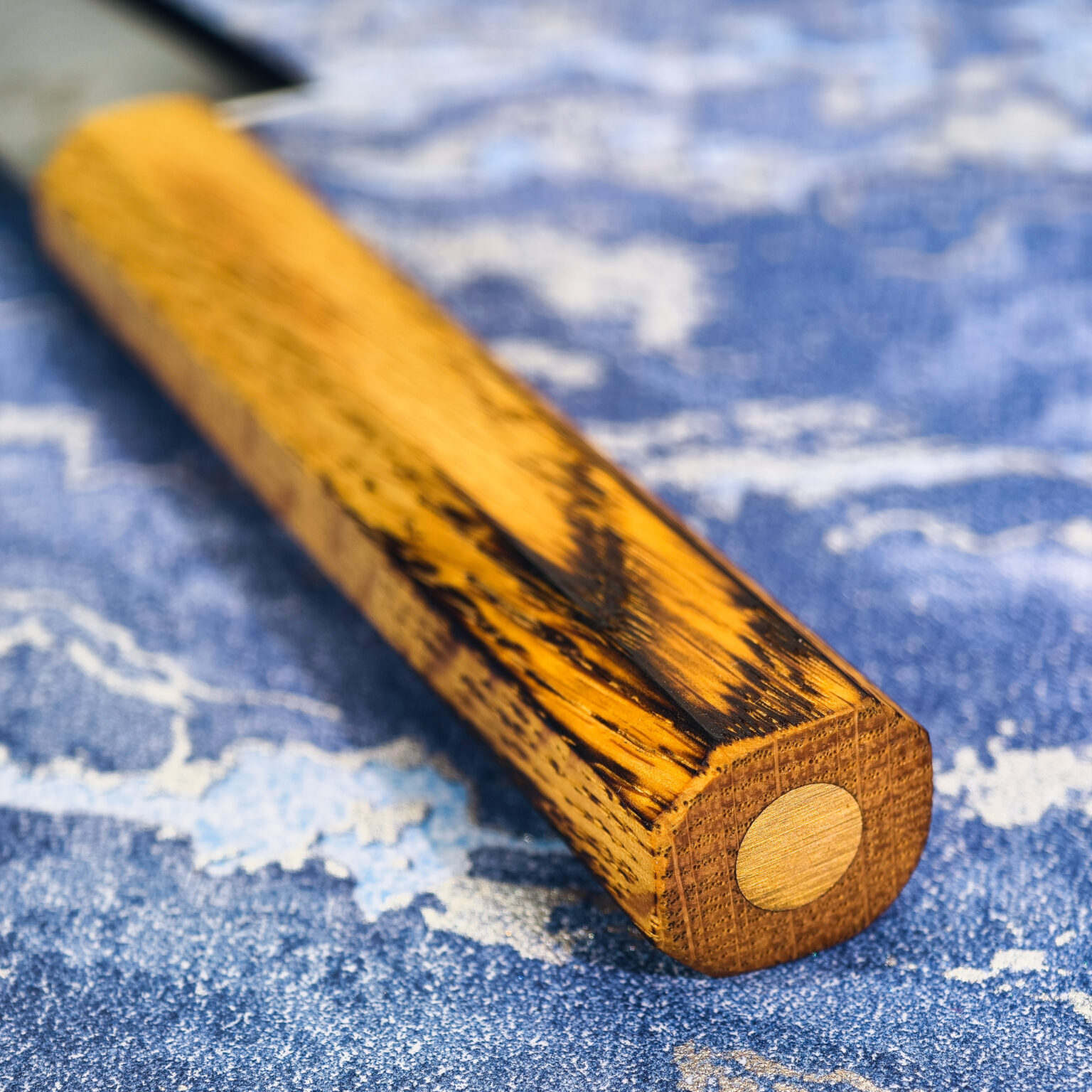 The handle
Thinner than most
people have tried.
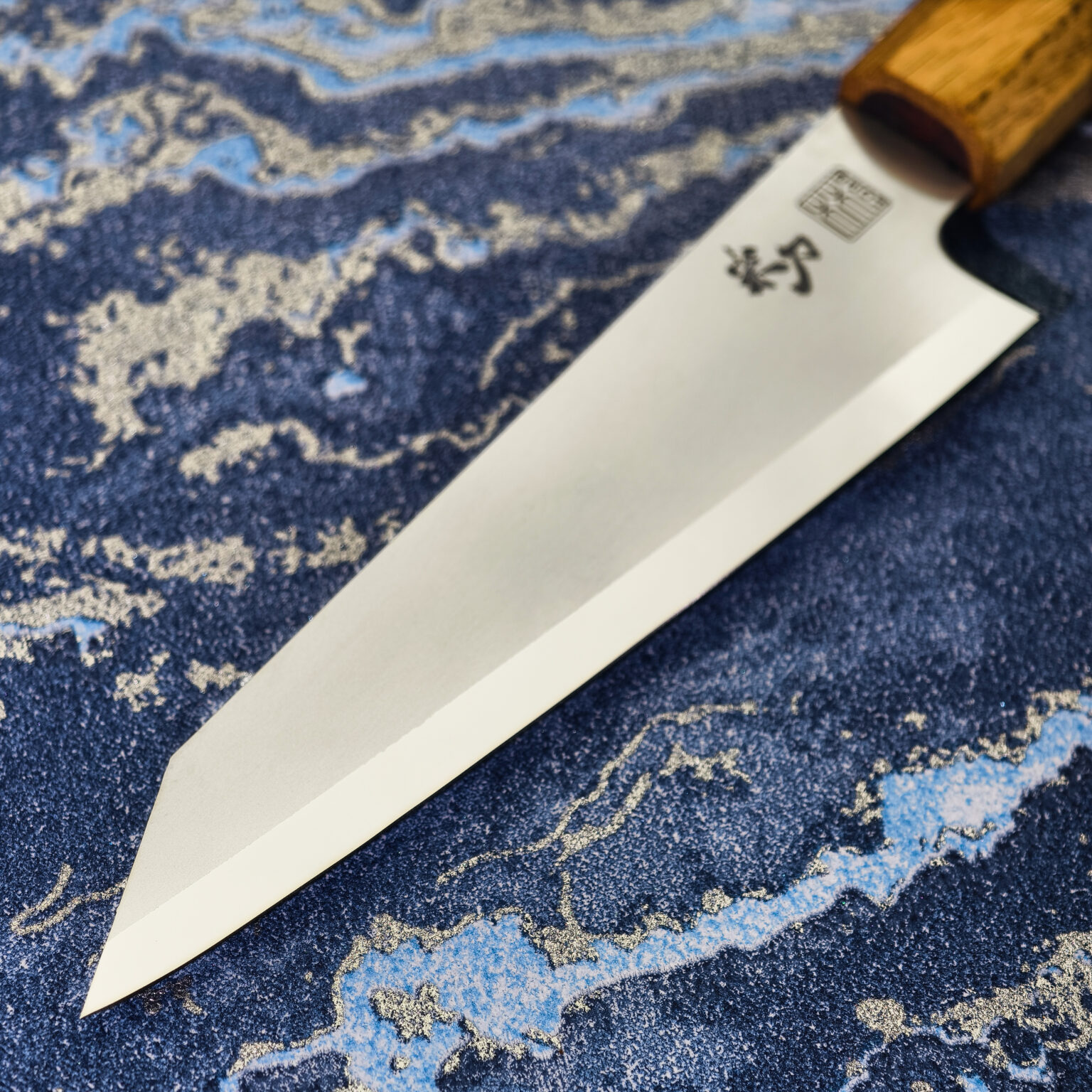
FREYA has the thinnest blade in RAW OAK. For most home cooks it will be the thinnest knife they have ever used. The blade meets very little resistance. You feel the difference at once.
Even when the edge loses its first bite, FREYA still meets less resistance than a thicker knife of similar sharpness, because there is very little steel behind the edge.
FREYA often comes out for one small job and ends up doing the next five.
From heat
to deep cold.
The steel is vacuum hardened and deep cooled in liquid nitrogen at −196 °C. The result is a hardness of 61 HRC.
61 HRC.
The edge needs a little care.
Hardness is one of the factors that affect how long a knife stays sharp. For comparison, a typical German chef’s knife is made of X50CrMoV15 steel, which is normally hardened to between 54 and 58 HRC. But hardness is only part of it. The blade’s geometry, the sharpening and how the knife is used matter too.
At 61 HRC and with a very thin blade, FREYA should be used with care. Keep it away from bones, frozen food and fruit stones, and do not use it on glass or stone boards.
The scale starts at 54 HRC. The ranges are references from MachineMFG and the steel mill SIJ Metal Ravne, not measurements of these particular knives.
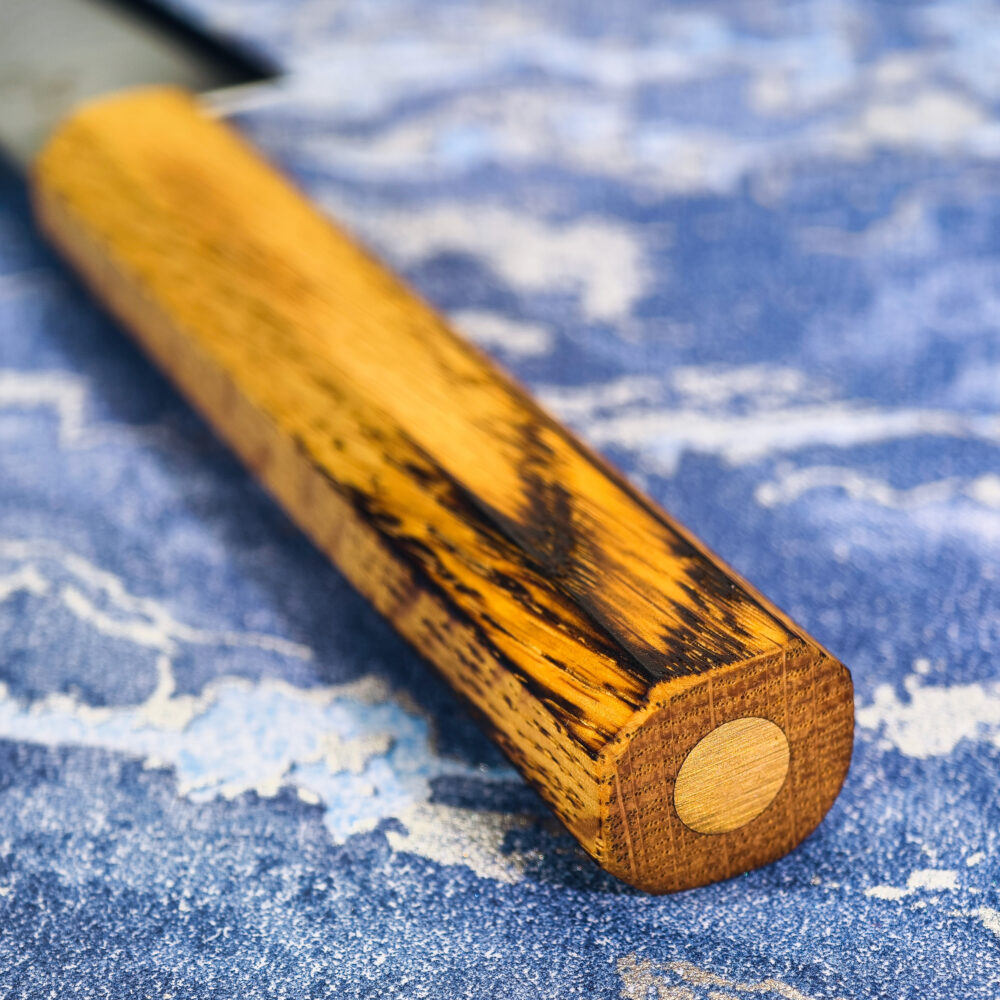 The handle
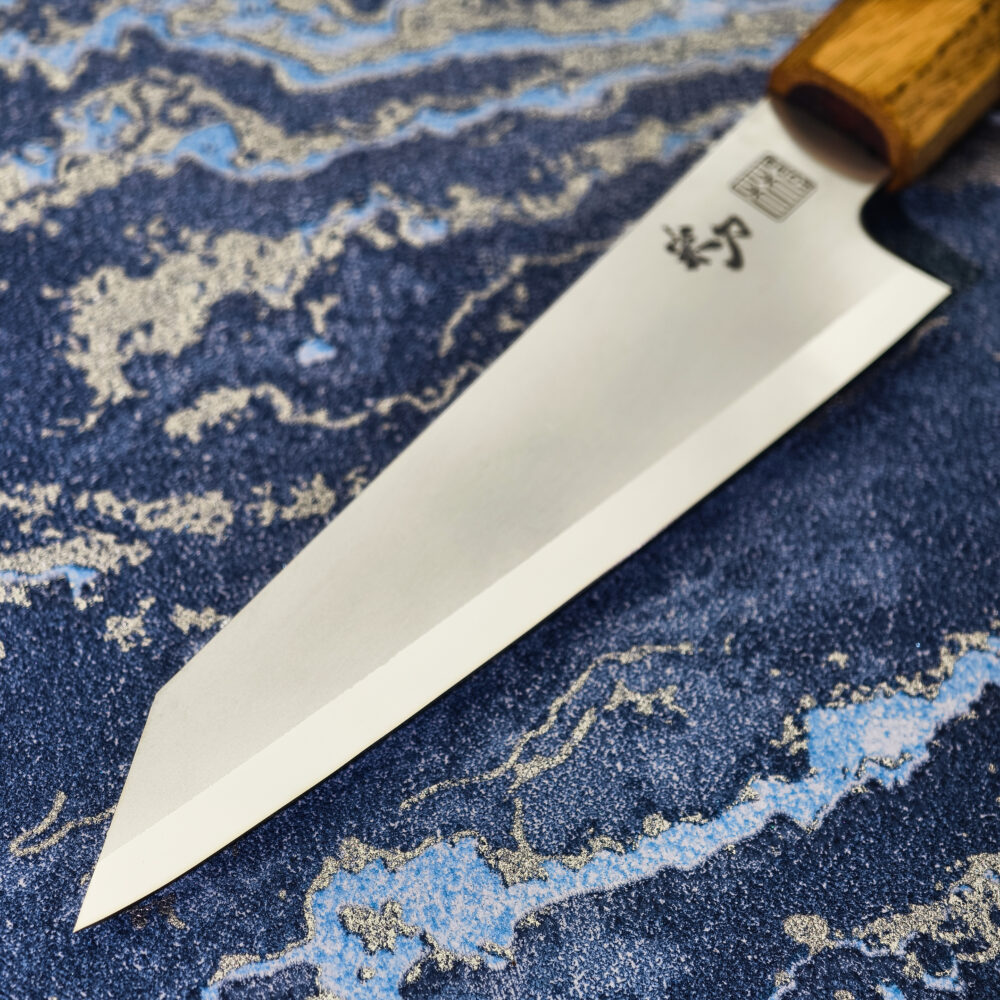 The blade
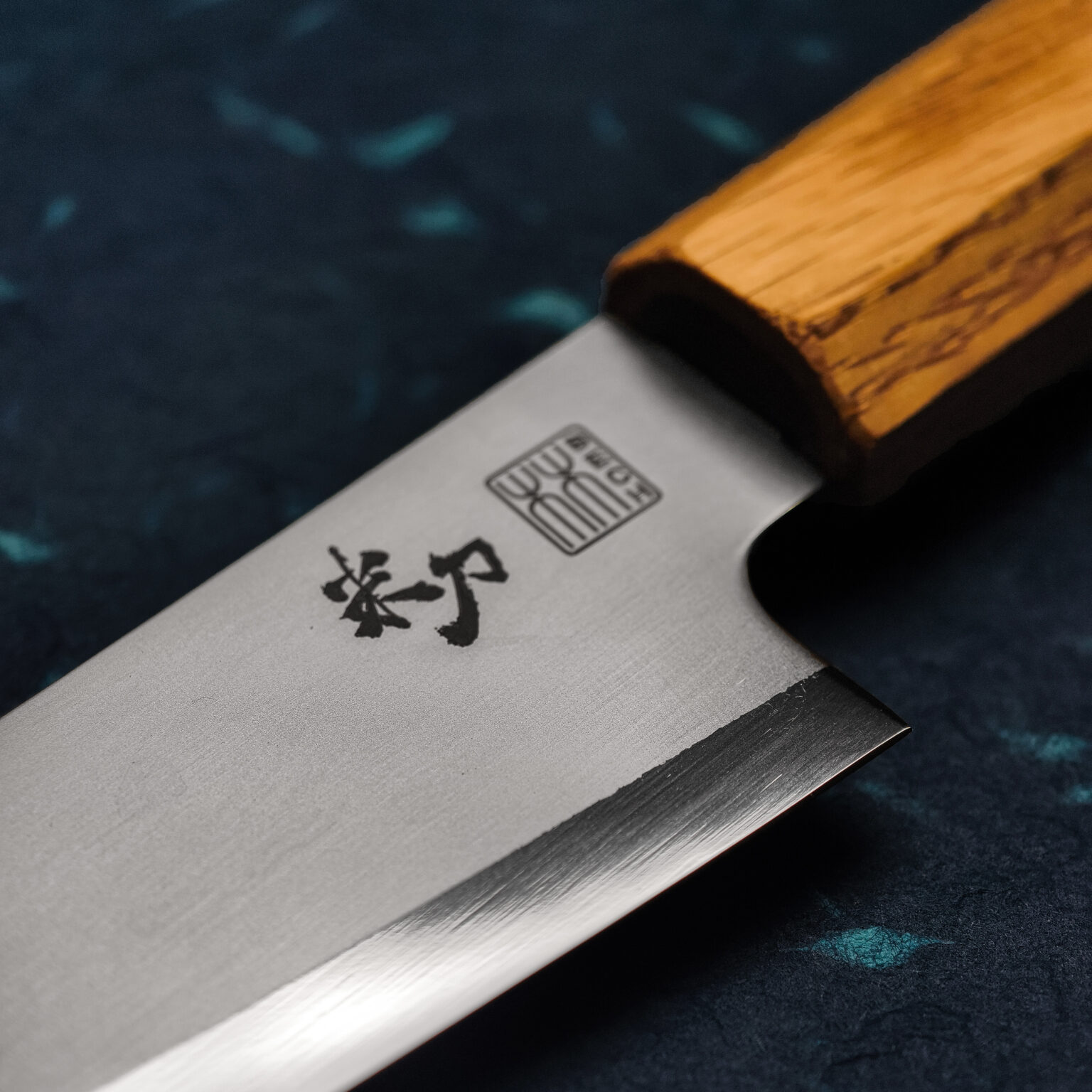
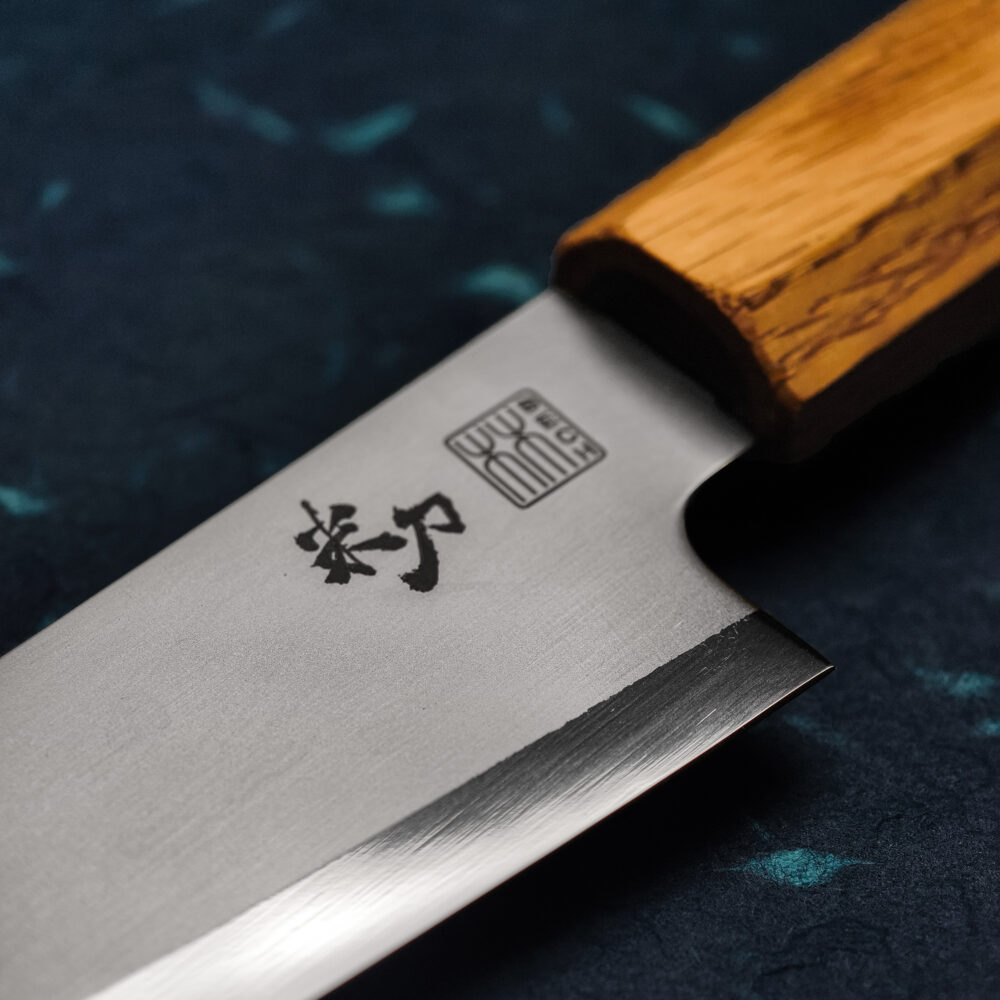 The mark
Oak and
thunder.
In Germanic tradition, the oak is linked with Thor, the god of thunder. The wood gave the RAW OAK series its name.
FREYA’s handle is stabilised oak. Every handle has its own grain. The brass end weight helps balance the knife.
Measurements
and materials.
Show more measurements
RAW OAK
- For fruit, shallots, herbs and small jobs. Not for bones, frozen food or fruit stones.
- 100 days to return, for any reason. Read the returns policy
- The knife arrives sharp. Unpack it carefully.
- FREYA is also in the 4-knife set and the 6-knife set.
- Questions? Ask Jacob on WhatsApp: +45 20 46 46 90
FREYA
or BALDR?
Both are small. FREYA has a longer, very thin blade for fruit and small, precise cuts. BALDR is a compact santoku with a sturdier blade, designed as a first real knife for children learning to cook with an adult. It also suits smaller hands.
- Blade
- 135 mm
- Weight
- 65 g
- Best for
- Fruit and small jobs
- Blade
- 105 mm
- Weight
- 73 g
- Best for
- Children with an adult, and small hands
FREYA in
a set.
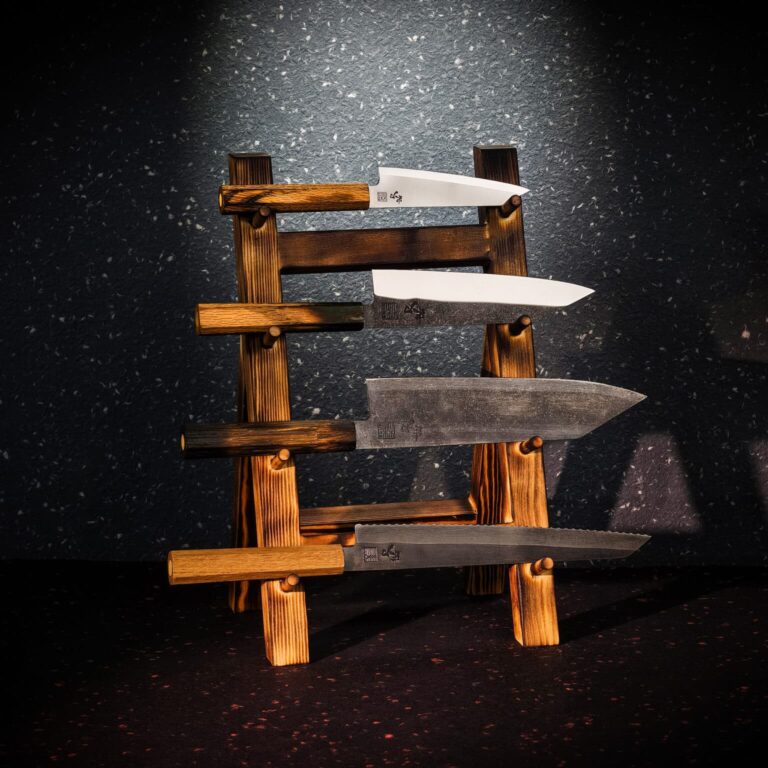
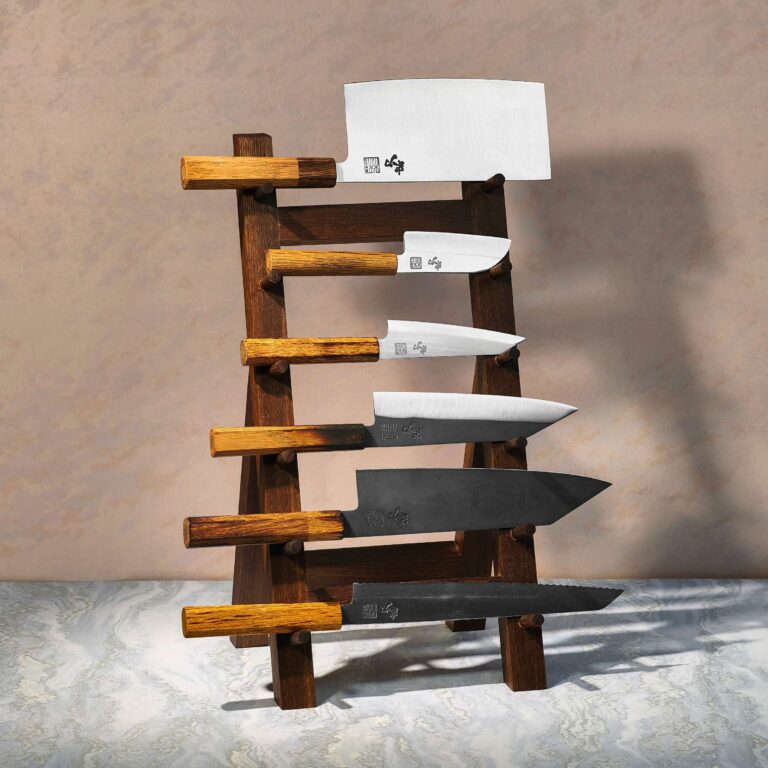
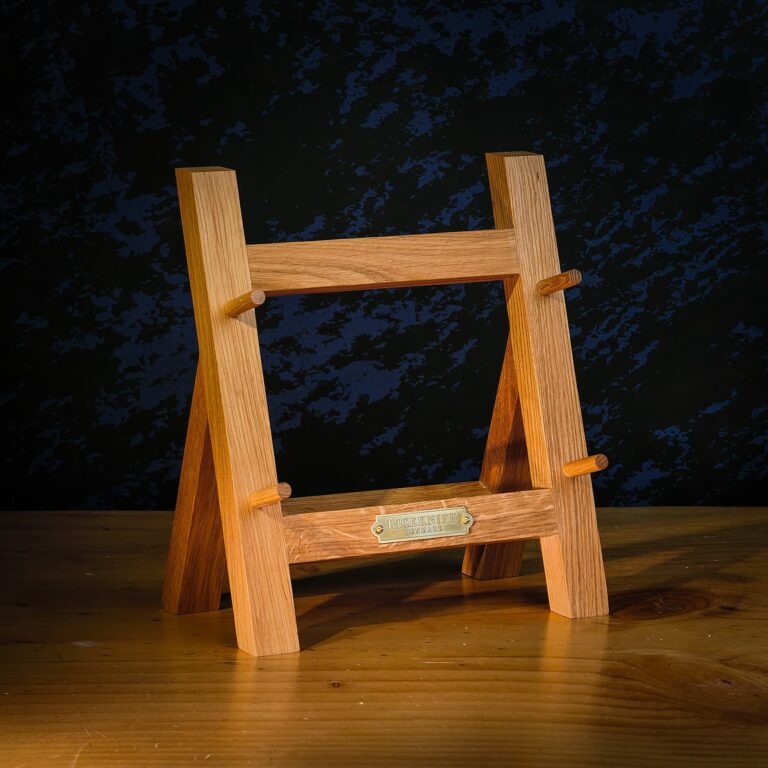
Simple care.
So it lasts.
Wash by hand
Wash the knife by hand, dry it straight away and put it away. Never in the dishwasher.
Use a wooden board
A board of wood or suitable plastic protects the edge. Avoid glass, stone and metal.
Look after the wood
If the handle starts to feel dry after months of hand washing, rub in a little food-safe wood wax.
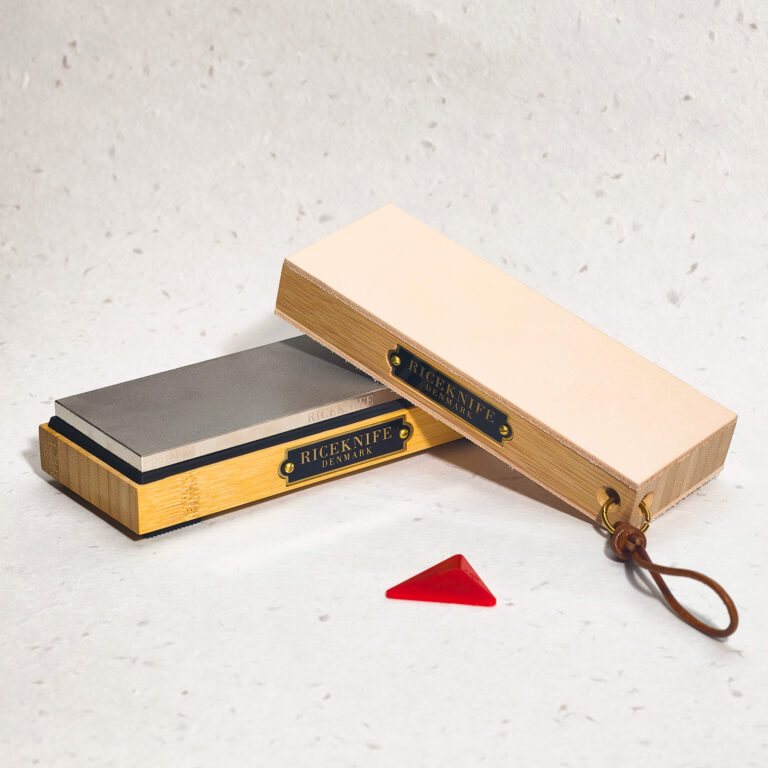
Learn to sharpen
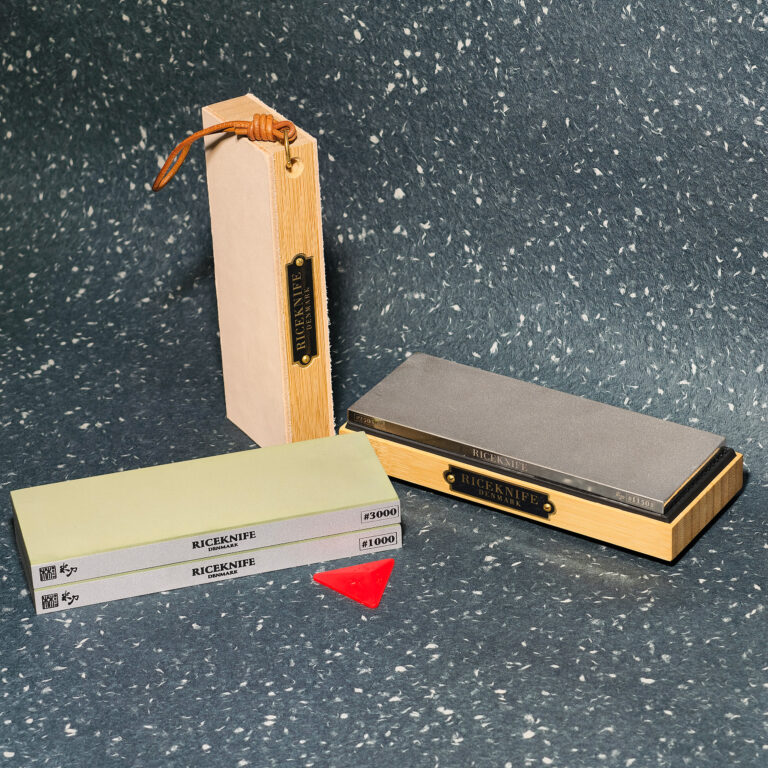
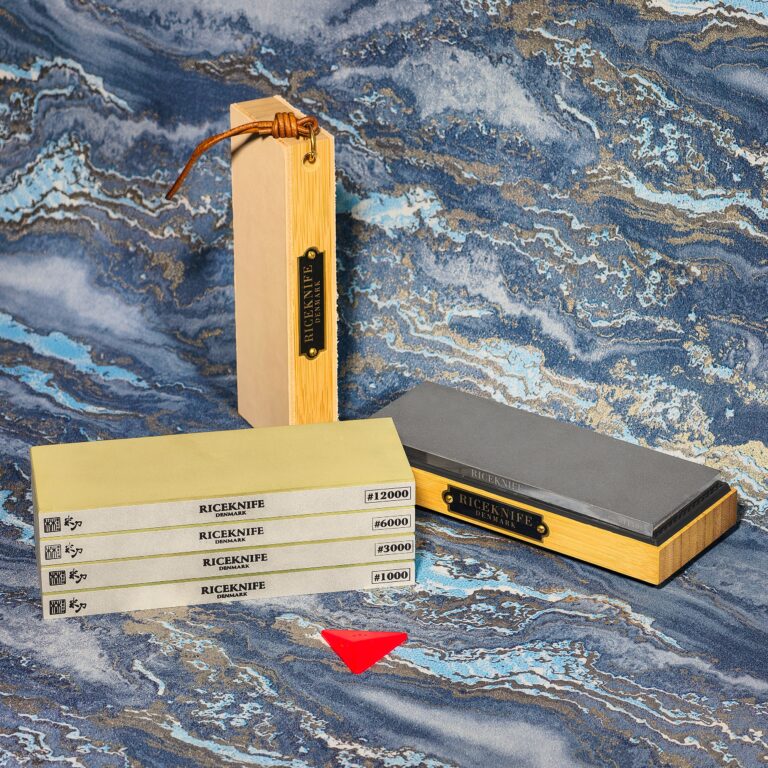
We do not offer a sharpening service. Jacob teaches you to sharpen your knives yourself. Read more about Jacob’s sharpening.
Before you decide.
Do I need FREYA if I have a chef’s knife?
If you do a lot of small jobs, yes. A chef’s knife can feel cumbersome when you are halving a plum, slicing a shallot or cleaning a few mushrooms. FREYA takes the small jobs, so the big knife can stay on the board. And you can return it within 100 days, for any reason.
Why 135 mm and not 120 or 150 mm?
At 135 mm, FREYA sits between a small paring knife and a larger chef’s knife. It is long enough for small jobs on the board and short enough to work in the hand. For large vegetables and roasts it is too short. That is ODIN’s and FRIGG’s job.
Is FREYA a paring knife or a petty knife?
FREYA is a utility knife, often called a petty knife. It sits between a small paring knife and a chef’s knife and is used both on the board and in the hand.
Will the blade chip if my family is not careful with it?
The blade is very thin and hardened to 61 HRC. Do not use it on bones or frozen food, and do not twist the blade against fruit stones. It is made for fruit, herbs and vegetables, but the thin edge needs careful handling.
Is FREYA a good gift?
Yes, for someone who cooks and finds chef’s knives too big. It weighs 65 g, was designed in Denmark by Jacob Bech and Shanru Lin, and has a stabilised oak handle with a brass end weight. The knife arrives sharp.
More questions
Will FREYA rust if it is left wet?
The steel is stainless 9Cr18MoV, but do not leave it in water. Wash it by hand and dry it straight away, so both the blade and the oak handle stay in good shape.
Is the knife sharp on arrival?
Yes. Every knife gets its final edge by hand, and Jacob checks the blade and edge of every knife before it ships. Unpack it carefully.
What steel is the blade made of?
Stainless 9Cr18MoV steel, vacuum hardened and deep cooled in liquid nitrogen. The hardness is 61 HRC. For comparison, a typical German chef’s knife is made of X50CrMoV15 steel, which is normally hardened to between 54 and 58 HRC.
Can I return the knife?
Yes. You have 100 days to return it, for any reason. If you change your mind, you pay the return postage. If the knife is faulty, we pay the return postage. Our returns policy does not affect your statutory rights.
Can the knife go in the dishwasher?
No. Wash the knife by hand, dry it straight away and put it away. A dishwasher can damage both the edge and the oak handle.
How do I keep the oak handle looking good?
If the oak starts to feel dry after months of hand washing, rub in a little food-safe wood wax.
Do you offer sharpening?
No, we do not offer a sharpening service. Jacob teaches you to sharpen your knives yourself, and we have sharpening sets for beginners, home cooks and professionals.
Why is the knife called FREYA?
Every knife in the RAW OAK series carries the name of a god from Norse mythology. Freya is the goddess of love and beauty. The knife carries her name, and its light, sure character comes from the geometry.
Light in the hand.
For all the small jobs.
The FREYA utility knife, designed by Danish chef Jacob Bech and Creative Director Shanru Lin. Made to last a lifetime.