FORGE Loss & Gain, Damascus santoku knife
Born from a blade that went wrong.
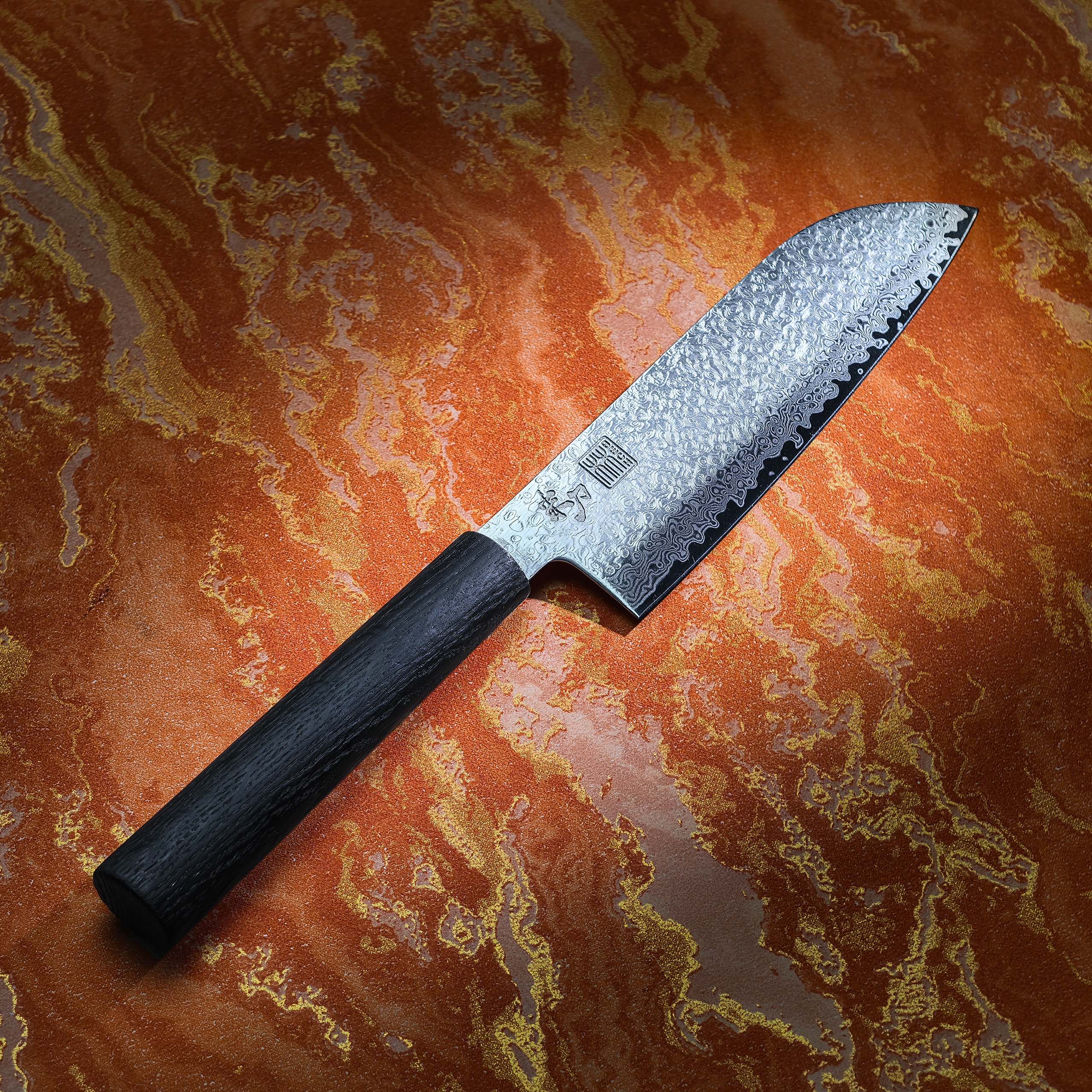 The whole knife
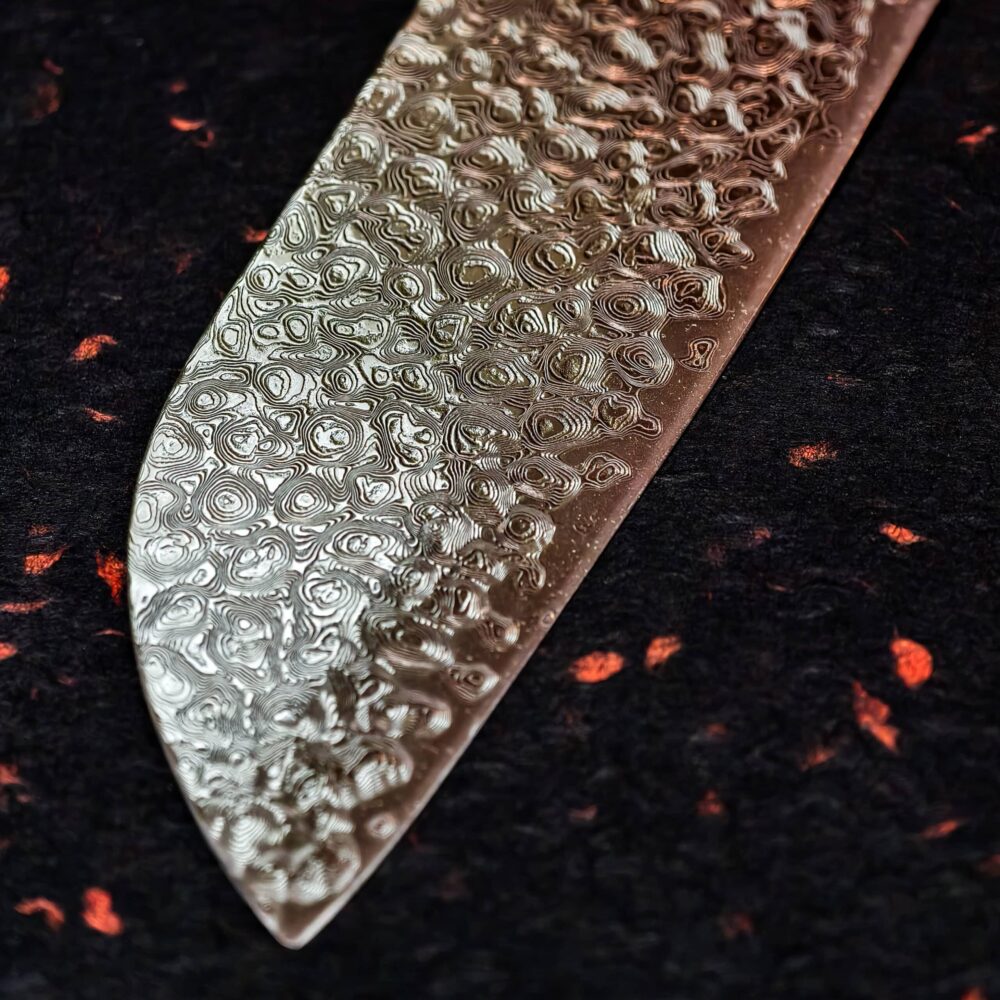
 The etched surface
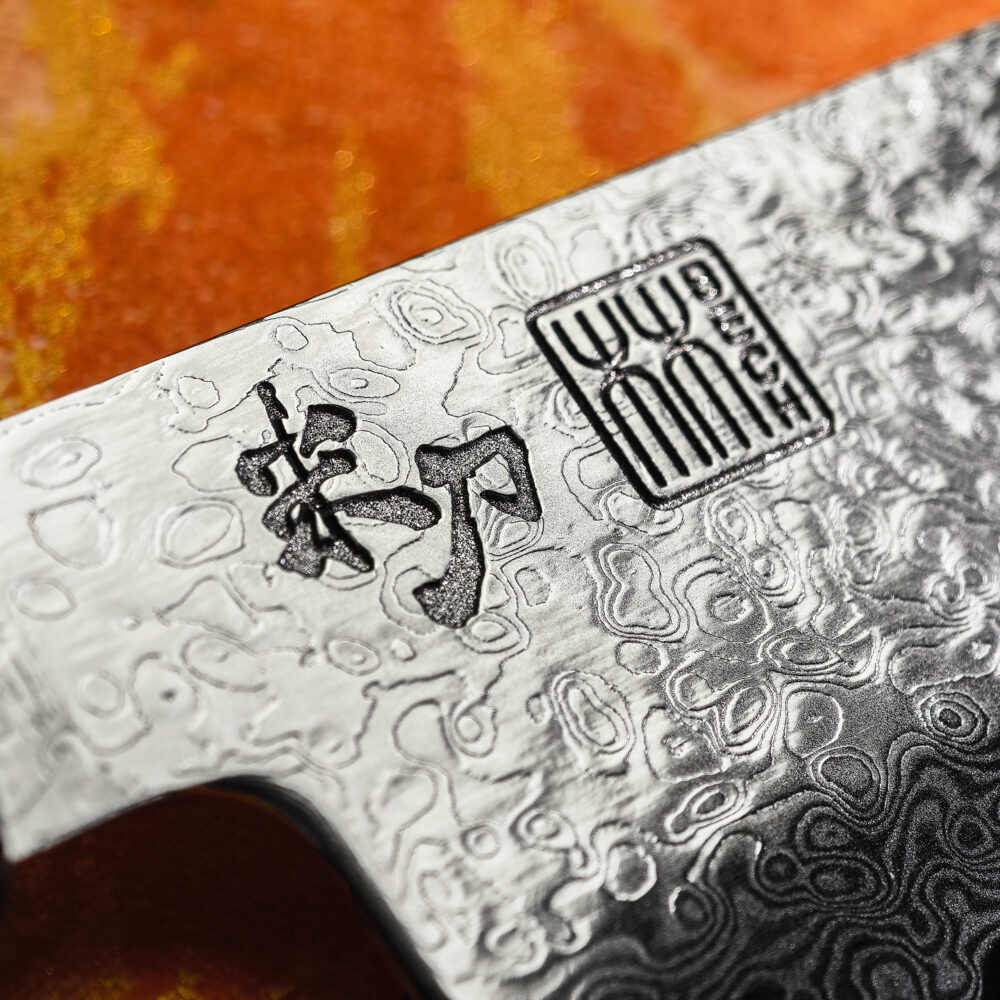
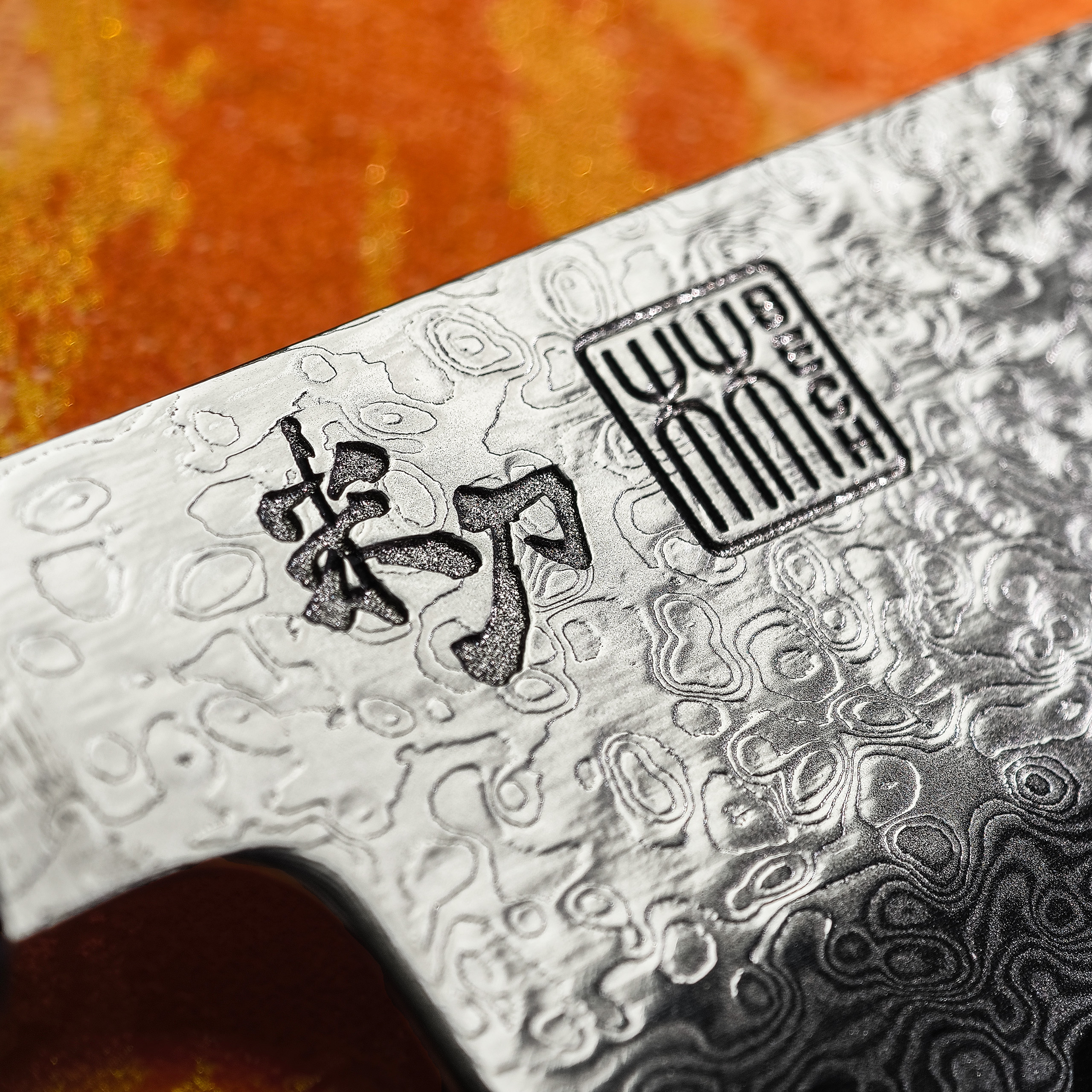 The heel and marks
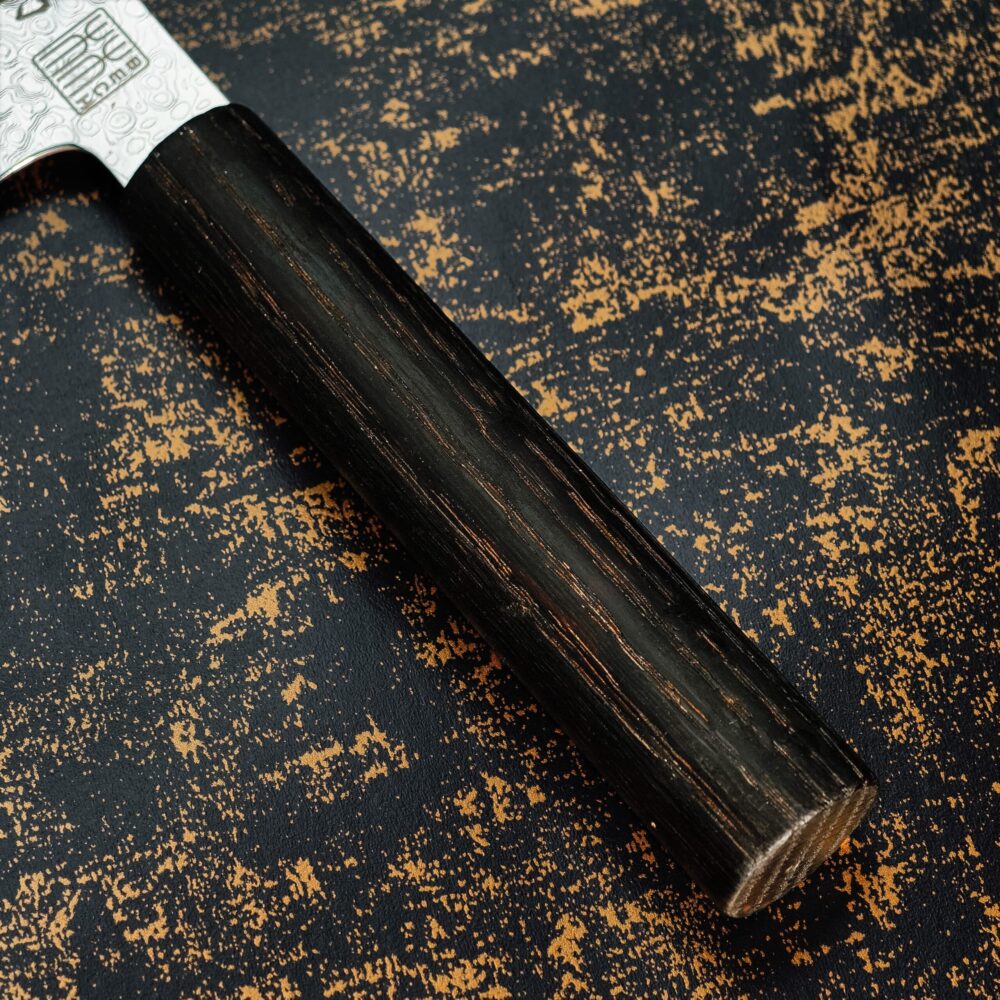
 The handle
Loss & Gain
A 185 mm santoku in 67-layer Damascus with a VG10 core at 62 HRC. The blade was ground thin, acid-etched and polished almost to a mirror. The oval handle is stabilised oak, finished by hand.The oval handle is stabilised pink oak.
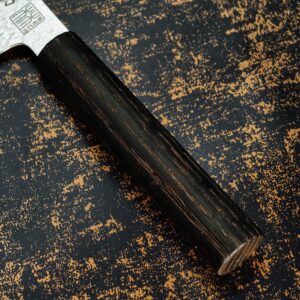 Oak
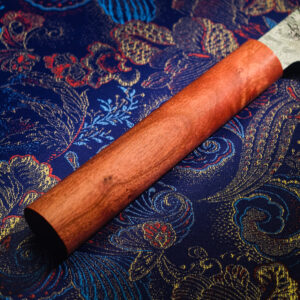 Pink oak
Preview · price, stock and the cart button load from WooCommerce on the live page
100-day returns for any reason; on a change of mind you pay the return postage.
Returns policy · Terms
Chapter IThe loss
It started as
another knife.
- 01
A test for YOLO III
Jacob was testing a hammered surface for YOLO III in the EX-ANIMO collection.
- 02
It went wrong
The hammered surface turned out completely different from what he had planned.
- 03
Ground away
To save the blade, he ground it far thinner than intended.
- 04
The limit
He stopped when the blade reached the limit of structural safety. There was nothing left to take away.
Chapter IIThe gain
Then the acid
found a pattern.
At the limit, Jacob acid-etched the blade. A pattern nobody had drawn came up through the steel, so he kept etching.
He finished with a near-mirror polish. The ripples now move across the surface with an almost three-dimensional depth, and that surface became the knife's defining feature.
The name塞翁失馬,焉知非福
Who can say
what is lost?
塞翁失馬,焉知非福 (Sài wēng shī mǎ, yān zhī fēi fú). An old story from the Huainanzi, set on the northern frontier. When Jacob's wife heard how the knife came about, this was the story she thought of.
-
ILoss
The horse is gone
The northern frontier. A fortress wall, and beyond it only wind and dust. An old man keeps a horse here. One morning the stall is empty. A rope still swings. The tracks lead north, past the wall, into the lands of the Hu, the horsemen of the steppe, where no one follows. The neighbours come to his door. They lower their voices. He looks at the empty road.
The neighbours“What bad luck.”
The old man“Who can say it is not a blessing?”
-
IIGain
Two horses return
Months pass. Snow comes and goes on the wall. Then one evening, hoofbeats out of the north. The lost horse trots through the gate, breath steaming. Behind it walks a stallion of the steppe, tall and dark. Two horses where there was one. The neighbours come again. The same faces, smiling now. The old man fills the trough and says little.
The neighbours“What good fortune.”
The old man“Who can say it is not a misfortune?”
-
IIILoss
The son falls
His son loves the new horse. Every day he rides it out along the wall, faster each time, the dust rising behind him. The stallion is strong and does not know the hand that holds it. One morning it throws him. They carry him home on a door. The bone in his leg is broken. It heals crooked. He will walk lame for the rest of his life.
The neighbours“What a misfortune.”
The old man“Who can say this too is not a blessing?”
-
IVGain
The riders come
A year turns. Then smoke on the horizon, and the sound of many horses. The Hu are crossing the border. Every able young man is called to the frontier to fight. Nine in ten do not come back. The lame son is passed over. He stays by the fire with his father. In the quiet house by the wall, father and son both live.
The neighbours“He was the lucky one.”
The old man“Who can say where it ends?”
-
VLoss, then gain
Again, in the workshop
Jacob is testing a hammered surface for the EX-ANIMO YOLO III. It comes out nothing like he planned. To save the blade he grinds it far thinner than intended, to the limit of structural safety. Then acid. A new pattern appears, so he keeps etching. A near-mirror polish, and the steel seems to move. The light blade asks for a light handle. After several attempts: oval stabilised oak, hand-finished and sealed with our own wax.
The workshop“A ruined blade.”
The old saying“Who can say it is not a blessing?”
“Both the handle and the blade were born from loss and found new life through persistence.”
Chapter IIIThe handle
A light blade
asks for a light hand.
Once the blade was this thin and light, it needed a handle to match. The texture had become the knife's character, so the handle needed the same. It took Jacob several attempts to get there.
- An oval handle in stabilised oak.
- Rough-sanded on the wire wheel.
- Finished by hand with very fine sanding.
- Sealed with RICEKNIFE Organic Handle Wax: Danish beeswax blended with food-grade mineral oil.
- The same light, oval handle, 135 mm long, in stabilised pink oak.
- A warmer, lighter tone beside the etched steel.
Two handles are available: oak or pink oak. The blade is the same.
Loss & Gain specifications
Thin steel.
Light oak.
The core steel
VG10
VG10 is a stainless steel alloyed with carbon, chromium and cobalt. The cobalt helps the steel hold a stable hardness through heat treatment, and the high chromium content gives it strong resistance to corrosion.
It takes a sharp edge that lasts, which is why so many cooks trust it. In Loss & Gain it is hardened to 62 HRC.
The FORGE series
Where control slips,
the forge begins.
Hand-forged by blacksmiths whose families have worked metal for generations. Some blades take shape when heat and metal react in ways nobody planned. FORGE is the series built from those moments.

Blood & Fire
Born from a heat-treatment mistake: the copper burned, the brass melted, and Jacob chose African ebony to bring it into balance.
See Blood & Fire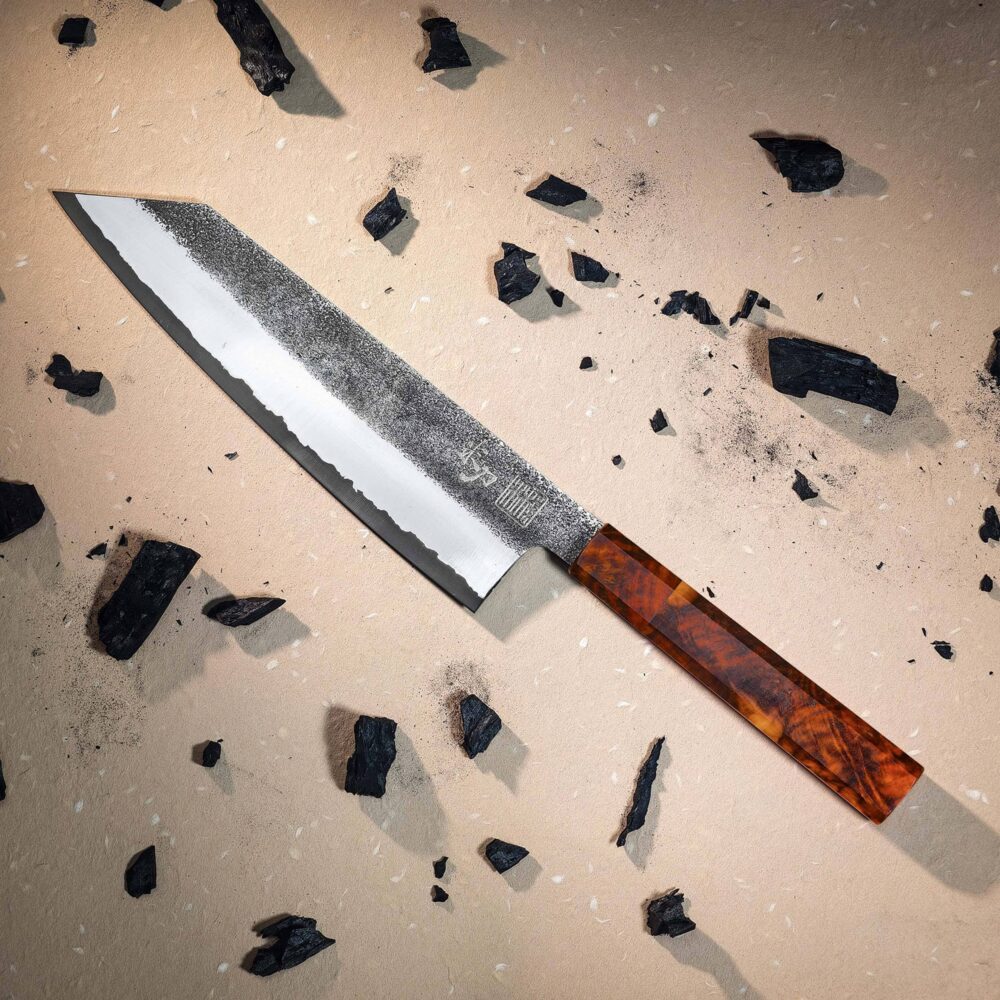
Ash & Chrome
A blue-paper-steel chef's knife with a forged top, a mirror-polished bevel and a dark patinated core.
See Ash & ChromeChapter IVCare and sharpening
Made to last
a lifetime.
Hand wash
Warm water and a little soap, then dry it straight away. Never the dishwasher.
Mind the thin blade
It was ground to the limit. Keep it away from bones, frozen food and twisting cuts.
Wax the oak
When the handle looks dry, rub in a little handle wax and let it soak in.
Sharpen on stones
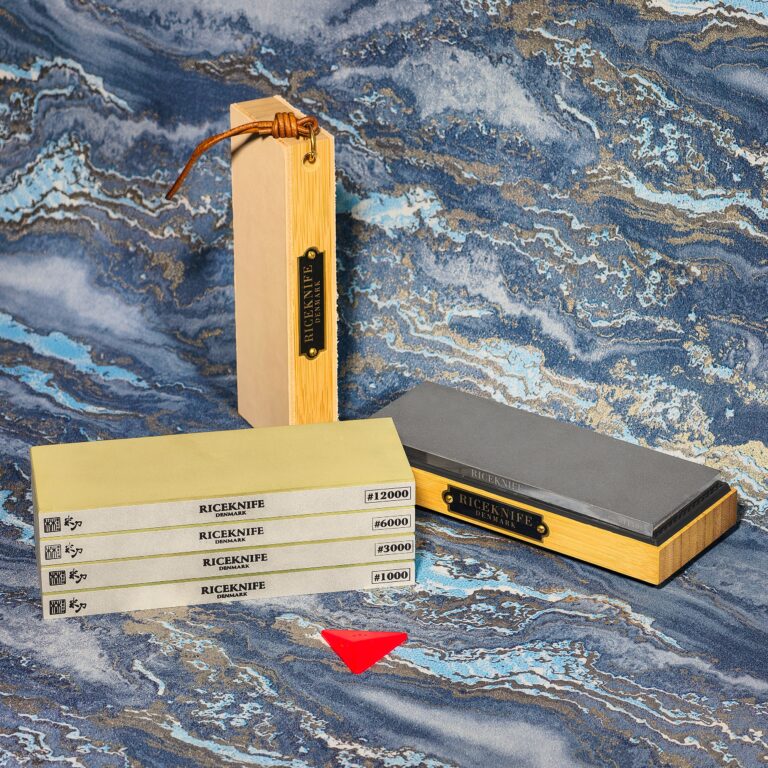
Use the RICEKNIFE sharpening system, not a pull-through sharpener.
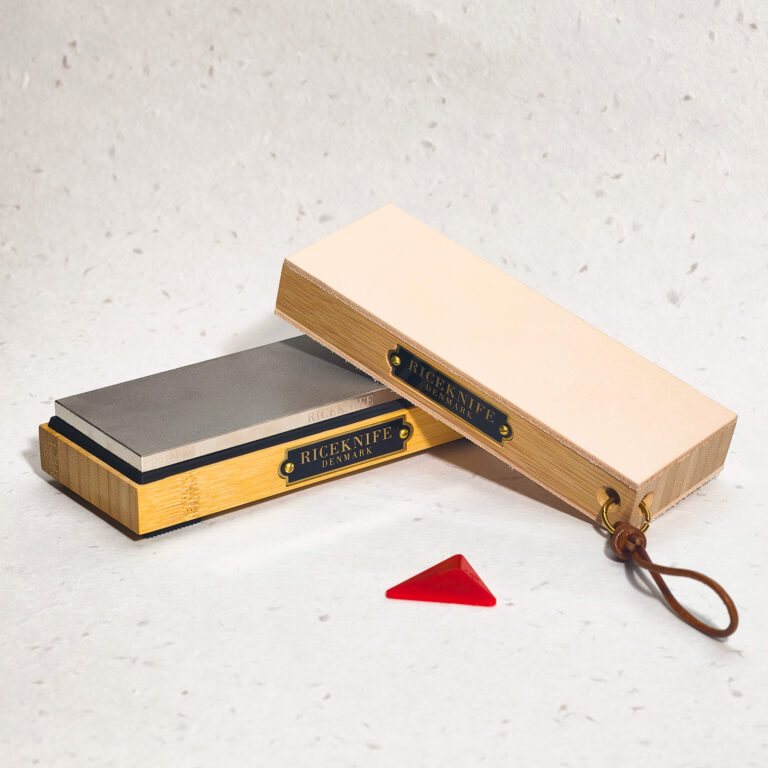
Beginner
For the first stones you ever own. Ten minutes a day, and within a few weeks you will be sharpening with confidence.
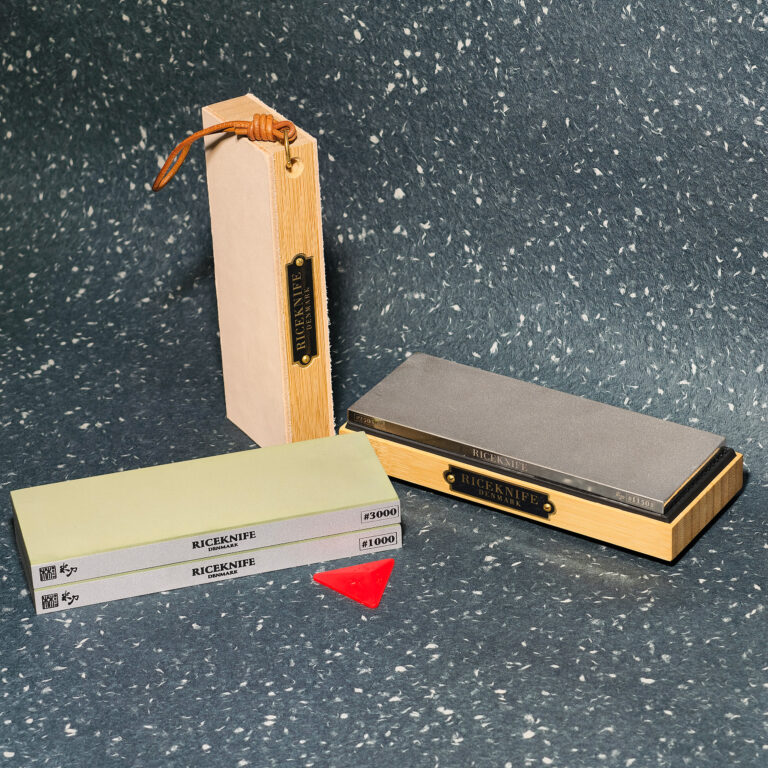
Chef
For anyone who cooks most days and wants the edge back in under five minutes.
Questions about this Damascus santoku
Before you decide.
Why is it called Loss & Gain?
The blade began as a test for YOLO III and the hammered surface went wrong. Jacob ground it far thinner than planned, then acid-etched it, and a new pattern appeared. The story reminded his wife of the Chinese saying 塞翁失馬,焉知非福: when the old man loses his horse, who can say it is not a blessing?
Which handle should I choose?
Loss & Gain comes with a choice of two oval handles in stabilised oak: natural oak, darker with an open grain, or pink oak, lighter and warmer. The blade, the steel and the size are the same. Use the handle choice next to the price to switch.
What is a santoku?
A Japanese all-purpose kitchen knife with a flatter edge and a tip that curves down to meet it. It is made for slicing, dicing and chopping vegetables, fish and boneless meat.
What is VG10 steel?
A stainless steel alloyed with carbon, chromium and cobalt. Cobalt helps it hold a stable hardness through heat treatment, and chromium gives strong corrosion resistance. In Loss & Gain it is hardened to 62 HRC.
Will it rust?
VG10 is a stainless steel with strong corrosion resistance. Even so, wash it by hand, dry it straight away and never put it in the dishwasher.
Is the thin blade fragile?
It was ground to the limit of structural safety, which is what makes it so light. Use it for vegetables, fish and boneless meat, and keep it away from bones, frozen food and twisting or prying cuts.
How do I look after the oak handle?
The handle is stabilised oak. Keep it dry, and when it starts to look dry, rub in a little RICEKNIFE Organic Handle Wax.
How is it different from EX-ANIMO III?
EX-ANIMO III knives have 73-layer Damascus blades with a VG10 core. Loss & Gain began as a test for YOLO III but became a knife of its own: ground much thinner, acid-etched and polished, with a light oval oak handle. It belongs to FORGE, the series built from moments when the work did not go to plan.
Who designed it?
Jacob Bech and Shanru Lin, the founders of RICEKNIFE.
What if it is not right for me?
You can return it within 100 days for any reason; on a change of mind you pay the return postage. Read the returns policy. Questions before buying? Call or WhatsApp Jacob on +45 20 46 46 90.
Something lost.
Something gained.
Born from a mistake. Kept by persistence.