
The Story Behind RICEKNIFE
Our design ambition is to create objects that remain meaningful through years of use, care and connection. Every RICEKNIFE begins with a story, whether it comes from a material, a design idea or the people behind it. We believe the relationship with a knife grows through cooking, maintenance and the moments created around food.
RICEKNIFE is a Danish kitchen knife brand founded by Jacob Bech and Shanru Lin, who jointly design every product line from the first idea to the finished knife. Our ambition is to rethink one of the most familiar tools in everyday life. A kitchen knife is something most people use without thinking about it, yet it is one of the few objects that directly connects our hands, our ingredients and the meals we create for ourselves and the people around us.
At RICEKNIFE, we explore every part of that connection. The shape of the blade, the balance, the materials, the surface, the handle and the story behind the design all belong together. We do not begin with the idea of adding decoration to a tool. We begin with the question of what makes a knife feel meaningful to use. A good knife should work naturally in the kitchen. It should help someone enjoy preparing food. But we also believe that everyday objects can carry personality. They can reflect curiosity, courage, memories and the ideas that inspire the people who create them. That is why we aim to make the world’s most interesting knives.
Jacob Bech
Shanru Lin
Nature and kitchens across cultures
Long before RICEKNIFE existed, Jacob Bech was fascinated by materials and the details found in the world around him. As a child, he was drawn to the textures of stone, bark and wood, noticing the differences that made natural materials unique. That curiosity became part of the way he later looked at knives: not only as tools, but as objects shaped by materials, touch and human use. The kitchen was another early influence. Jacob would stand on a chair in the kitchen watching food being prepared, observing the movements, ingredients and atmosphere around cooking. Those early experiences created a connection between making, eating and sharing that stayed with him.
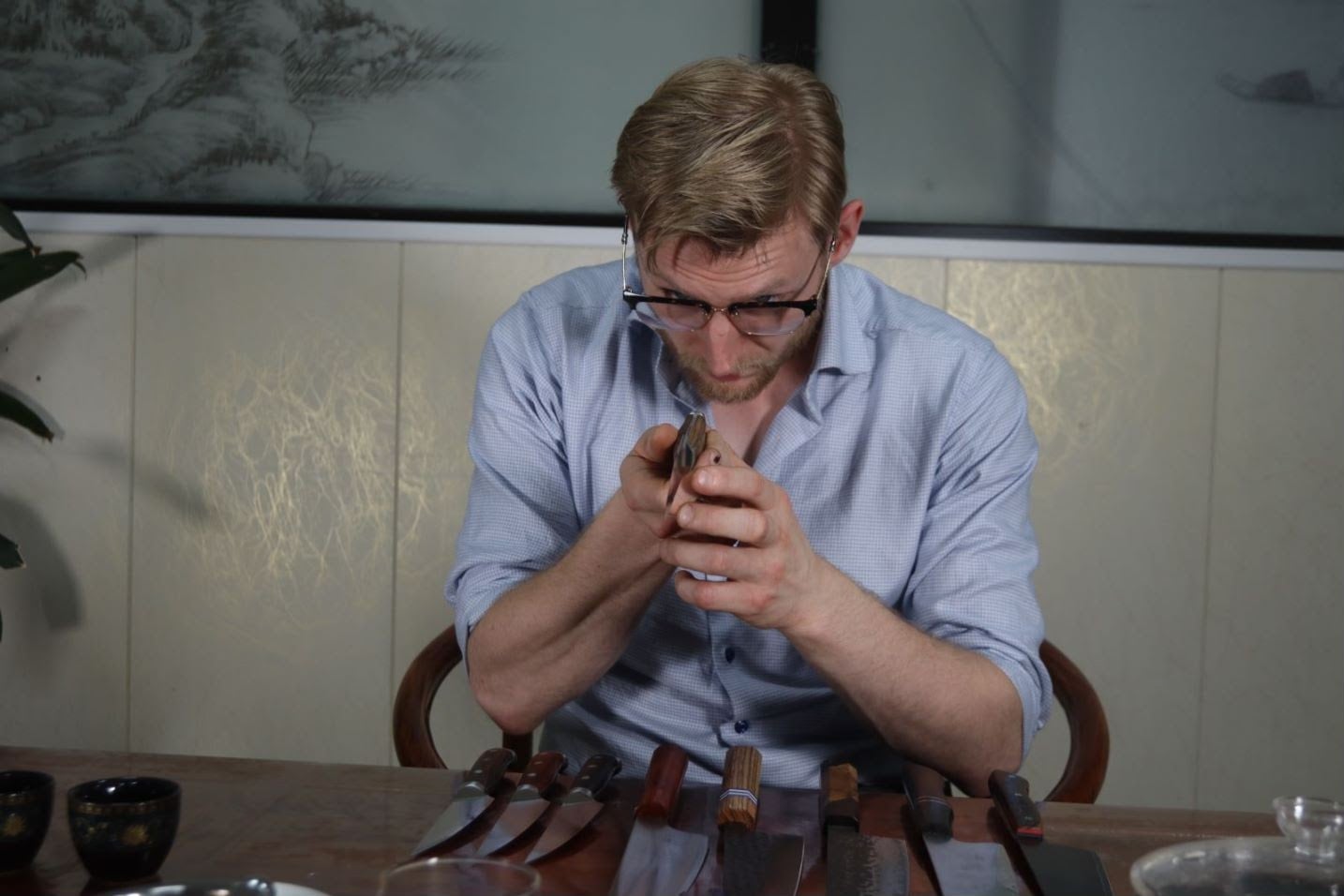
His professional journey began in Copenhagen kitchens, including a work experience placement at Noma and later an apprenticeship at Bistro Bohème. These were different experiences with different purposes, but both contributed to his understanding of cooking, discipline and the standards required in a professional kitchen. Over the years, Jacob’s work took him between Copenhagen, Hong Kong, Bali and Kuala Lumpur. Experiencing different ingredients, cooking traditions and ways of gathering around food broadened his view of what a kitchen could be. Through his years in Asia, he was involved in opening more than 16 restaurants.
The combination of Danish cooking culture and Asian influences changed the way he thought about food. In particular, he came to appreciate the importance of meals as something shared between people, where cooking is not only about preparing ingredients but also about creating connection. That understanding became one of the foundations of RICEKNIFE.
The decision to create the knives he wanted to use
RICEKNIFE began with a practical desire: Jacob wanted to create the kind of knife he wished he had while working in the kitchen. A chef spends countless hours with the same tools. Small details become important. The way a knife moves through food. The feeling of the handle. The balance between control and comfort. The difference between something that simply performs a task and something that feels right in the hand.
Turning that idea into a brand required a serious commitment. Jacob sold his only apartment in Copenhagen to start RICEKNIFE. The decision was not about creating another ordinary kitchen knife company. It was about building a brand around a different way of looking at knives: combining practical experience, thoughtful design and the emotional connection people can develop with objects they use every day.

RICEKNIFE was created together with Shanru Lin, whose contribution goes far beyond building the business around the products. She is part of the creative direction, research, design development and communication of the brand. Together, Jacob and Shanru design every RICEKNIFE product line. Their work begins with ideas and continues through materials, design decisions, storytelling and the final product experience. Jacob brings years of cooking experience and practical understanding of kitchen tools. Shanru brings research, cultural understanding and the ability to develop ideas into a complete brand expression. Their collaboration is what gives RICEKNIFE its character.
From Designing Knives to Making Them
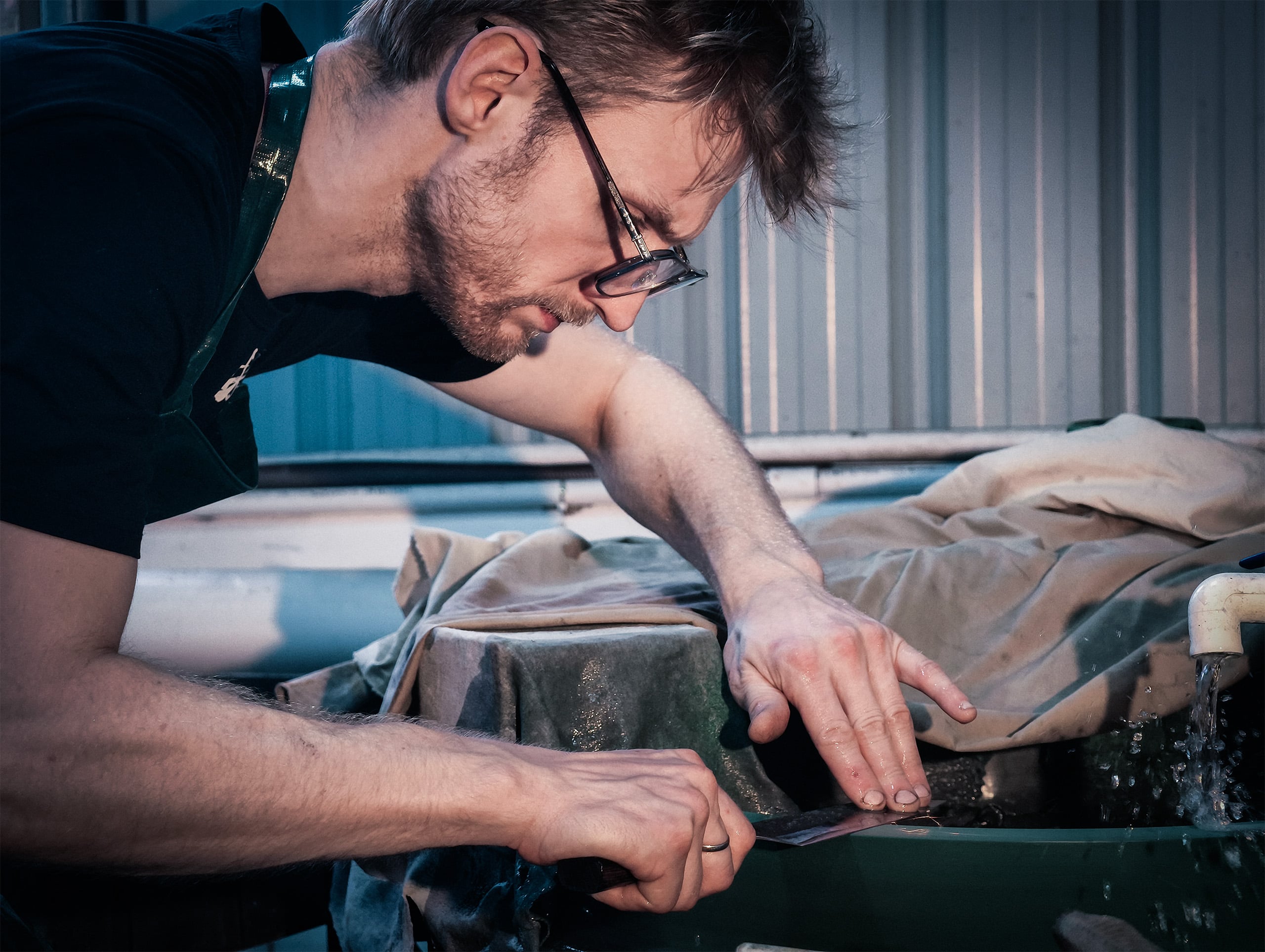
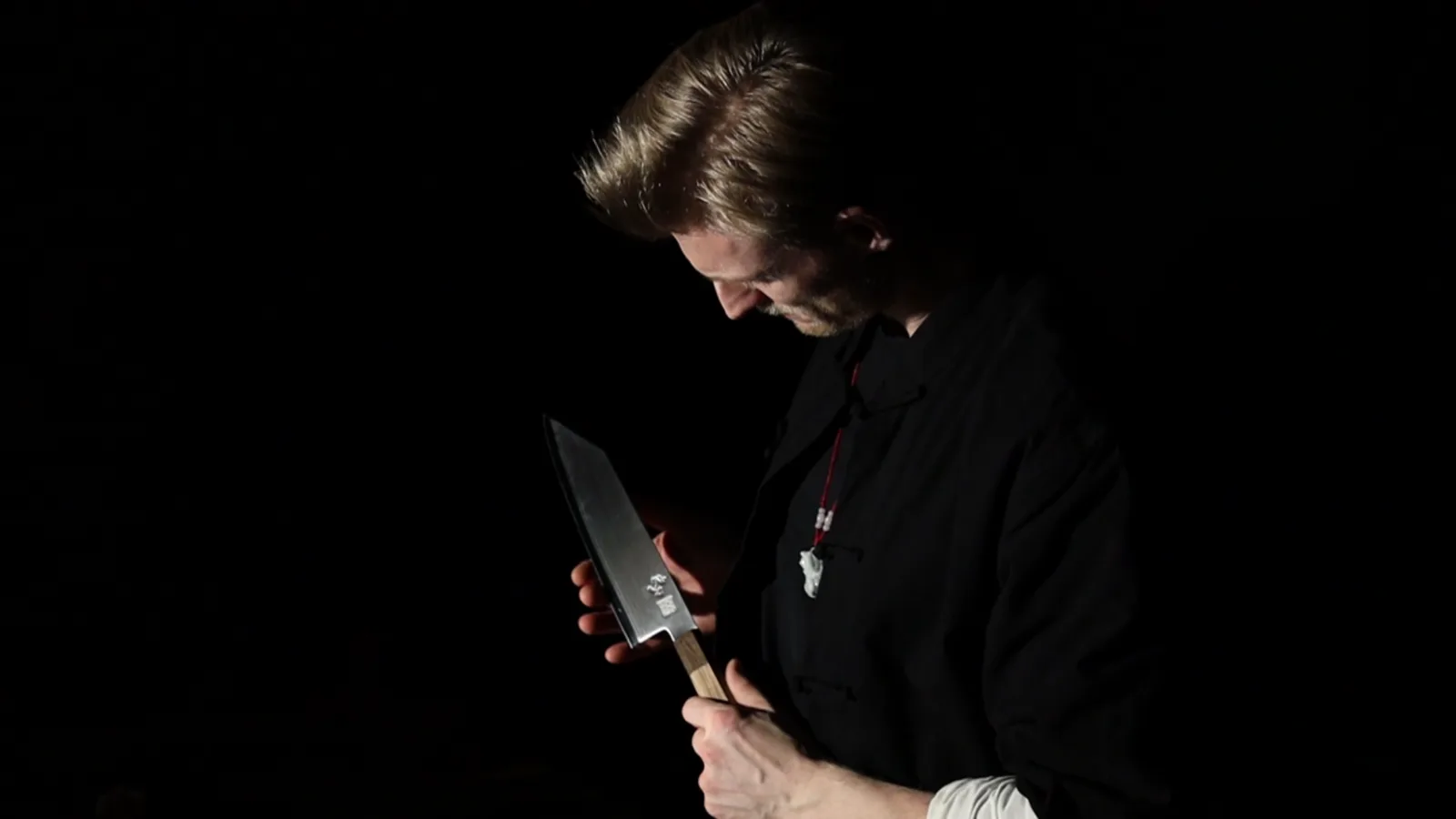
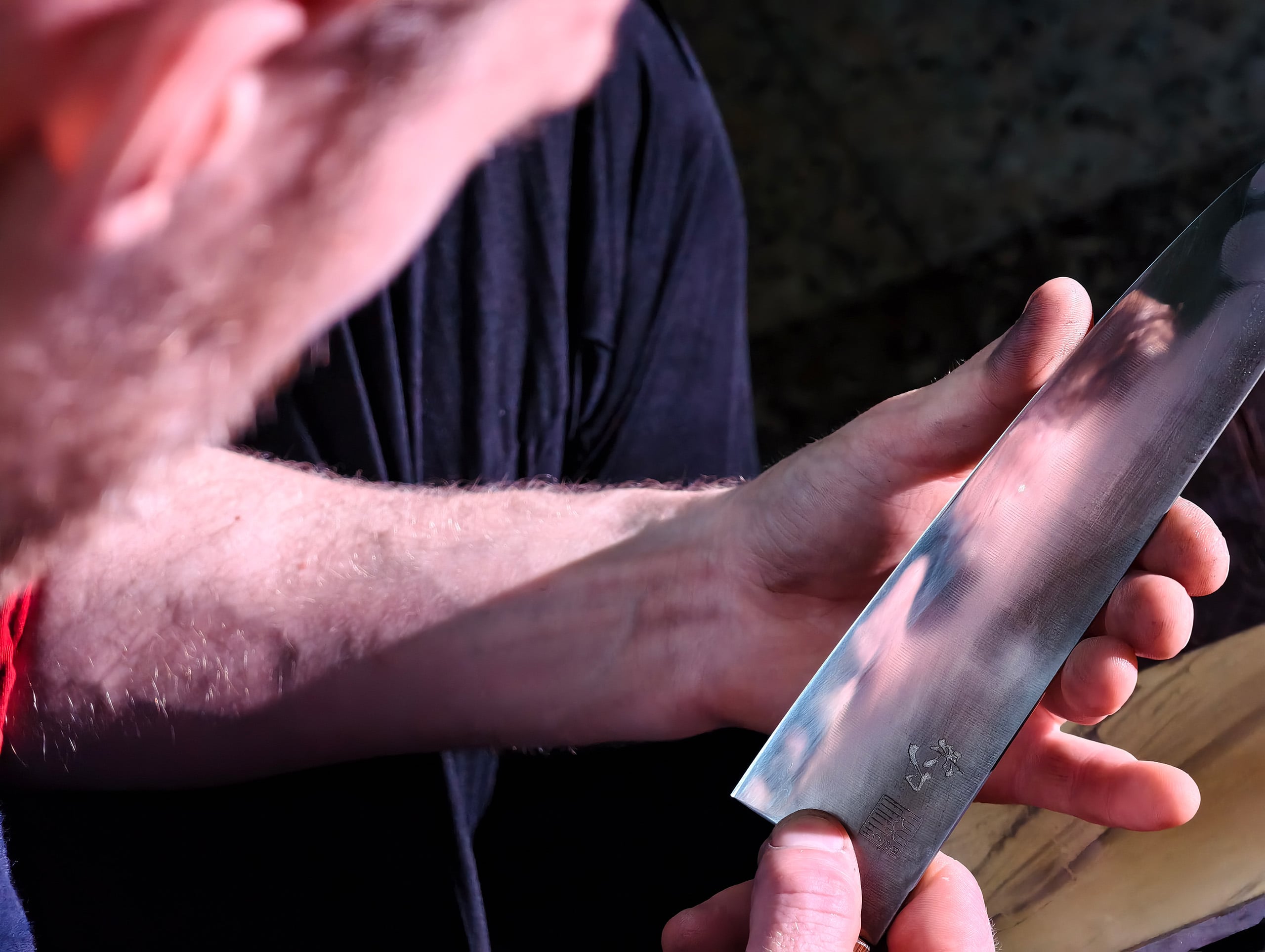
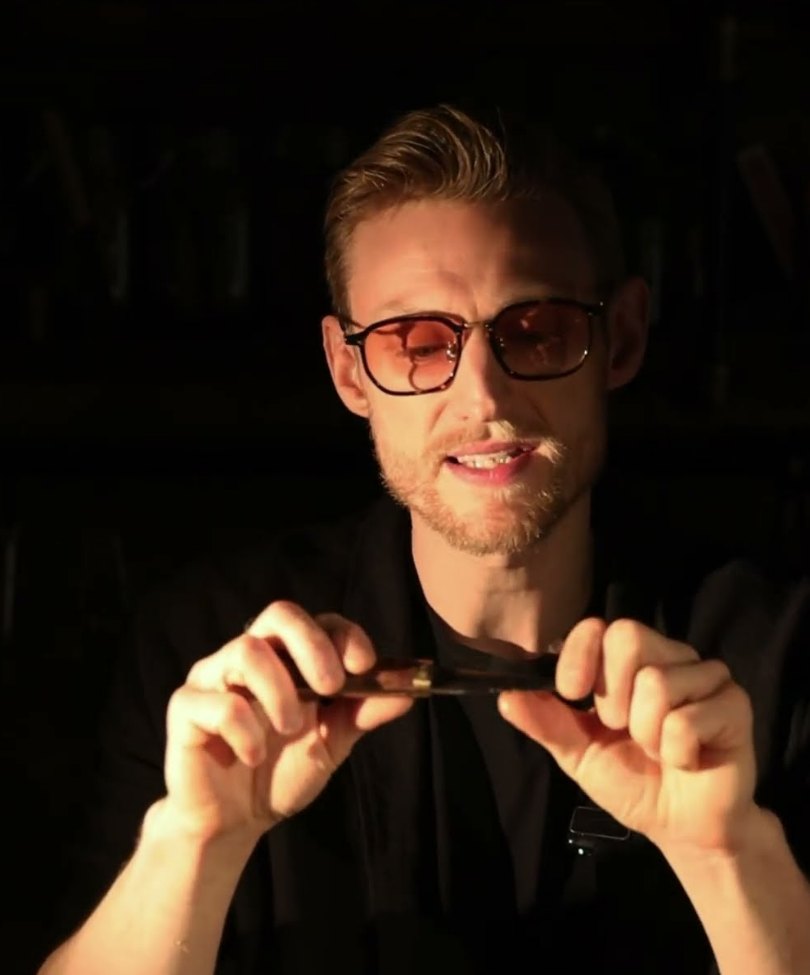
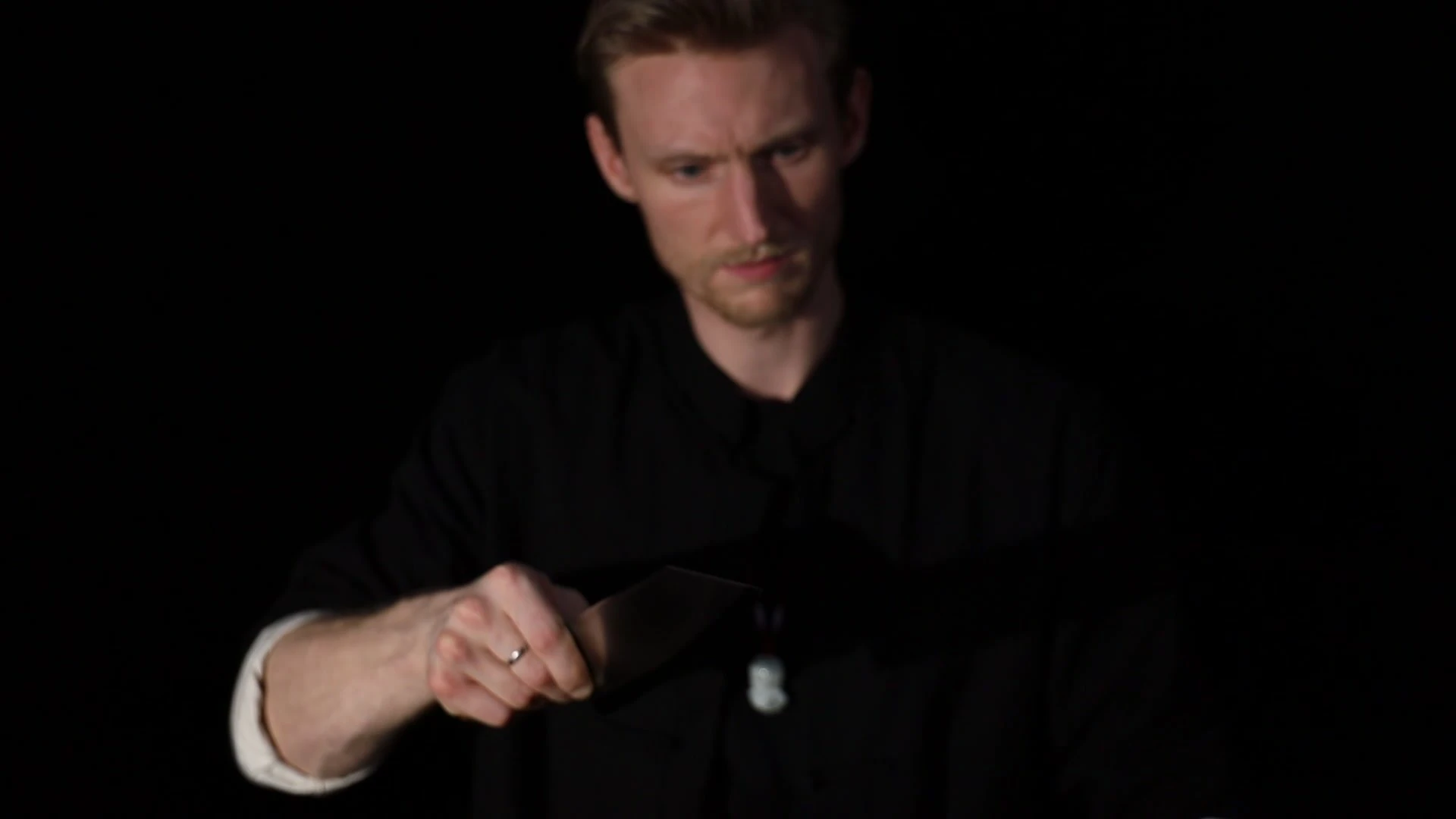
Jacob’s work with knives does not stop at ideas and sketches. A significant part of his time is spent in the workshop, developing and making knives by working closely with the materials, shapes and details that define each design. This hands-on process allows him to understand the relationship between a concept and the finished object, from the character of a blade to the way a knife feels when it is used.
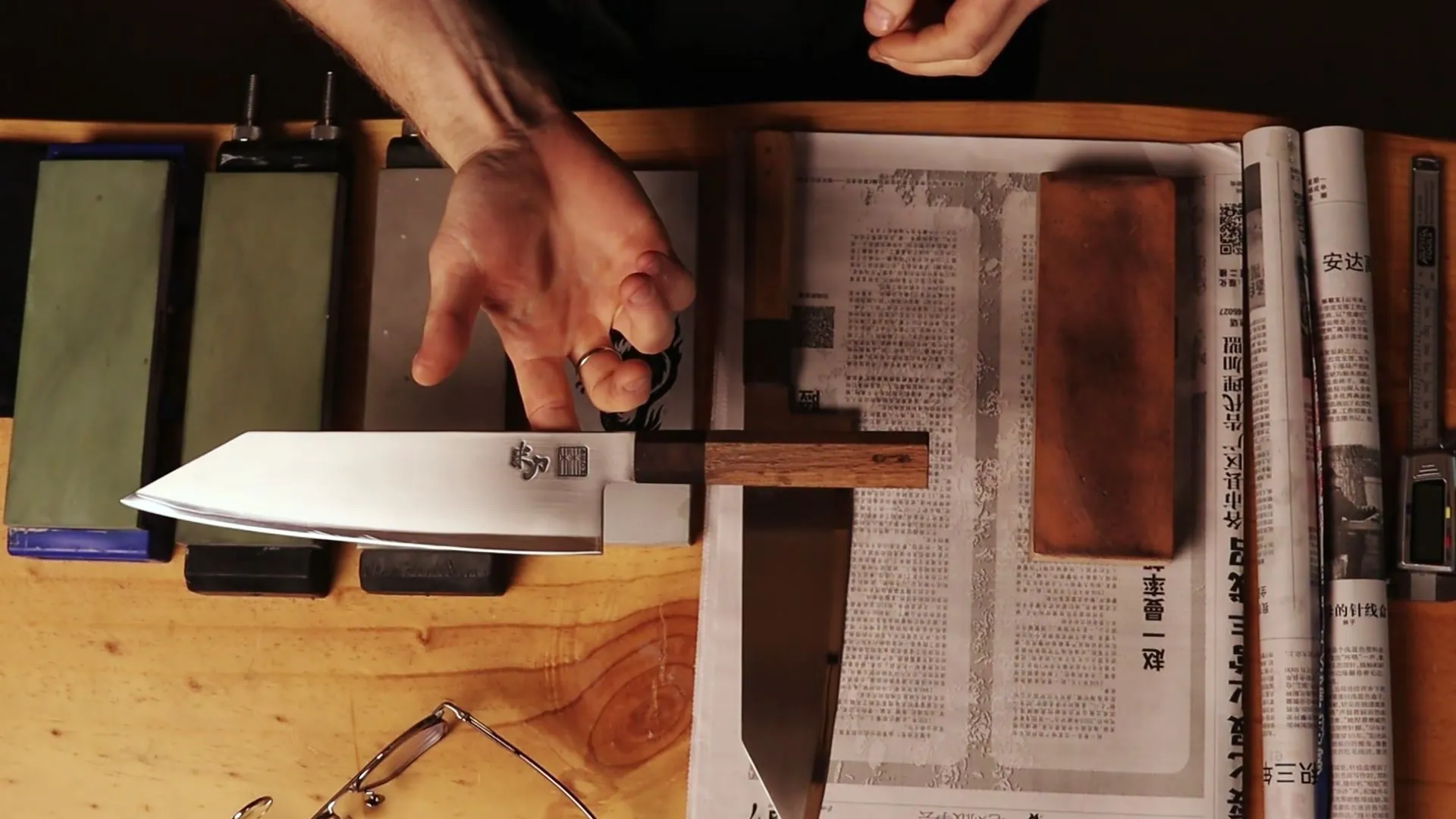
His interest in knives also extends to what happens after the first cut. Through years of studying and working with sharpening, Jacob developed the RICEKNIFE sharpening system to help people better understand how to care for their knives. The system includes diamond stones, leather strops, holders and angle guides, with the focus on building practical skills rather than simply choosing the largest setup.
For Jacob, sharpening is part of understanding a knife. The right approach depends on the knife, its condition and the work someone wants to do. This same practical mindset guides the way RICEKNIFE develops products: not only creating knives with character, but helping people build a lasting relationship with the tools they use.
Designing between cultures and ideas
RICEKNIFE is a Danish design brand shaped by international experiences. Its identity comes from the meeting of different perspectives: Danish simplicity, professional kitchen experience, Asian craftsmanship and curiosity about the world of materials. We do not believe that good design belongs to only one tradition. Food itself has always moved between cultures. Ingredients travel, techniques evolve and meals bring different people together.
The original inspiration behind RICEKNIFE comes from this connection. Cooking can be deeply personal, but it is also something shared. A family-style dinner, a meal prepared for friends or a simple dish made with care can create a connection between people. This relationship between food and culture influences the way we design. A knife does not exist separately from the person using it. It becomes part of preparation, conversation and the experiences built around the table.
Designs with meaning
Many RICEKNIFE designs begin with a question beyond function: what idea should this object carry? EX ANIMO is one example. The name means “from the soul”, reflecting the belief that people should have the courage to express who they are and follow their own path. The collection was designed by Jacob Bech and Shanru Lin from the first sketches to the finished knives. Each design explores a different expression of individuality and strength.
YOLO III
Appreciating the present moment, through the phrase 人生苦短,及時行樂: life is short, enjoy it while you can.
人生苦短,及時行樂
AMOR II
The symbol of the heart and the inscription Amor vincit omnia, expressing the strength of love.
TIGRITUDE III
Knowing your own strength and having the courage to let your voice be heard.
VALKYRIE III
The confidence to stand by who you are.
SHARK II
Choosing your own direction instead of simply following others.
CARBON I
A carbon fibre handle and periodic-table inspired details, connected with the themes of life and endurance.
YOLO III carries the idea of appreciating the present moment through the phrase 人生苦短,及時行樂: life is short, enjoy it while you can. AMOR II uses the symbol of the heart and the inscription Amor vincit omnia, expressing the strength of love. TIGRITUDE III represents knowing your own strength and having the courage to let your voice be heard. VALKYRIE III reflects the confidence to stand by who you are. SHARK II carries the idea of choosing your own direction instead of simply following others. CARBON I connects its carbon fibre handle and periodic-table inspired details with the themes of life and endurance.
These ideas are not separate from the knives. They influence the design choices themselves: the forms, materials, surfaces and details. Earlier designs also show this freedom between cultures. DREKI, for example, combines an Old Norse name meaning dragon with an Asian dragon symbol on a Western bread knife. The idea was to bring curiosity and enjoyment into an everyday kitchen task. For RICEKNIFE, a design becomes interesting when there is a reason behind it.
Materials with a history
Materials have always been part of how we think about design. We are drawn to wood because every piece carries traces of time, texture and origin. Collecting old woods with real stories has become part of our creative exploration, because a material can influence the character of an object long before it becomes part of a finished knife.
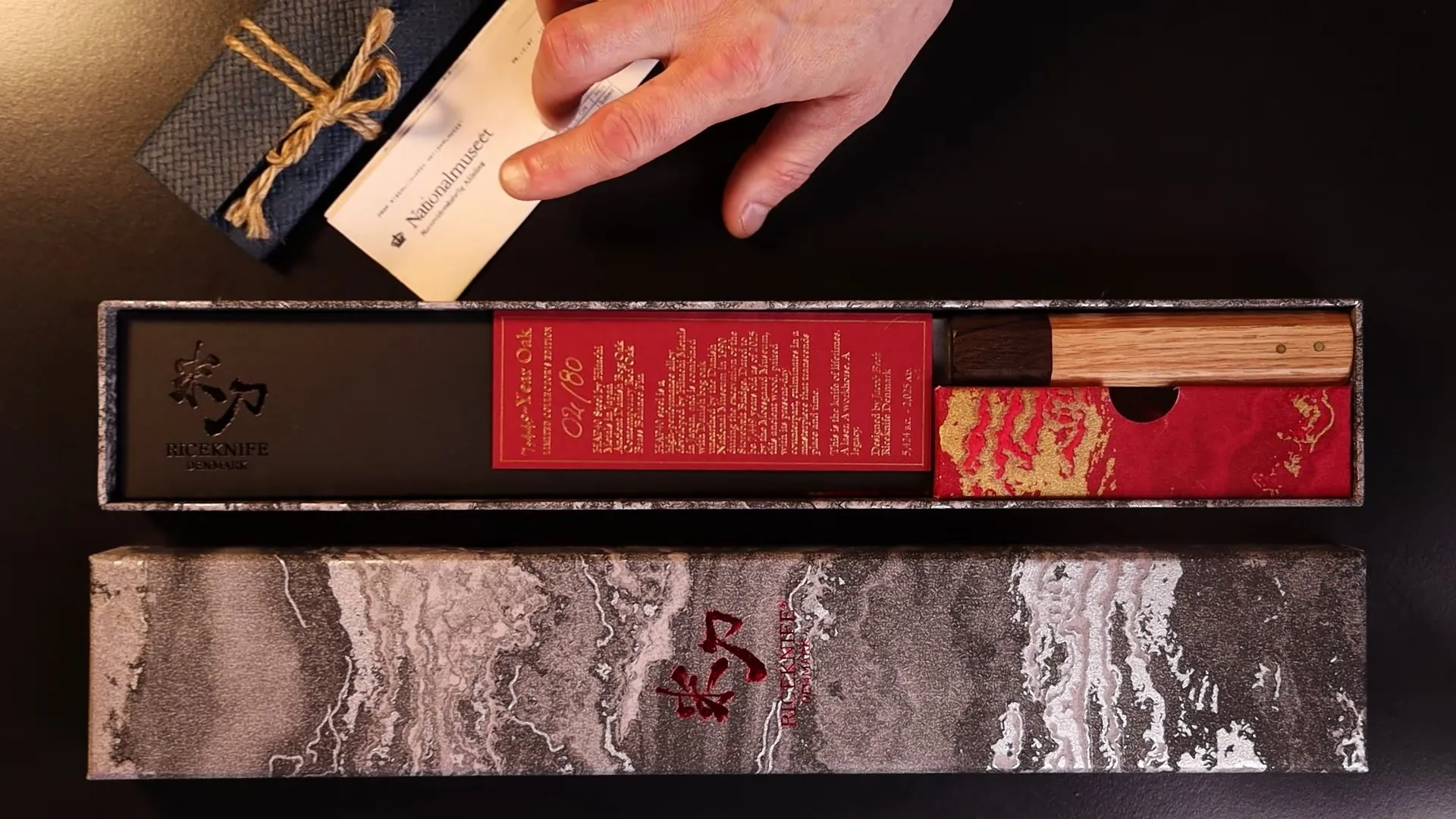
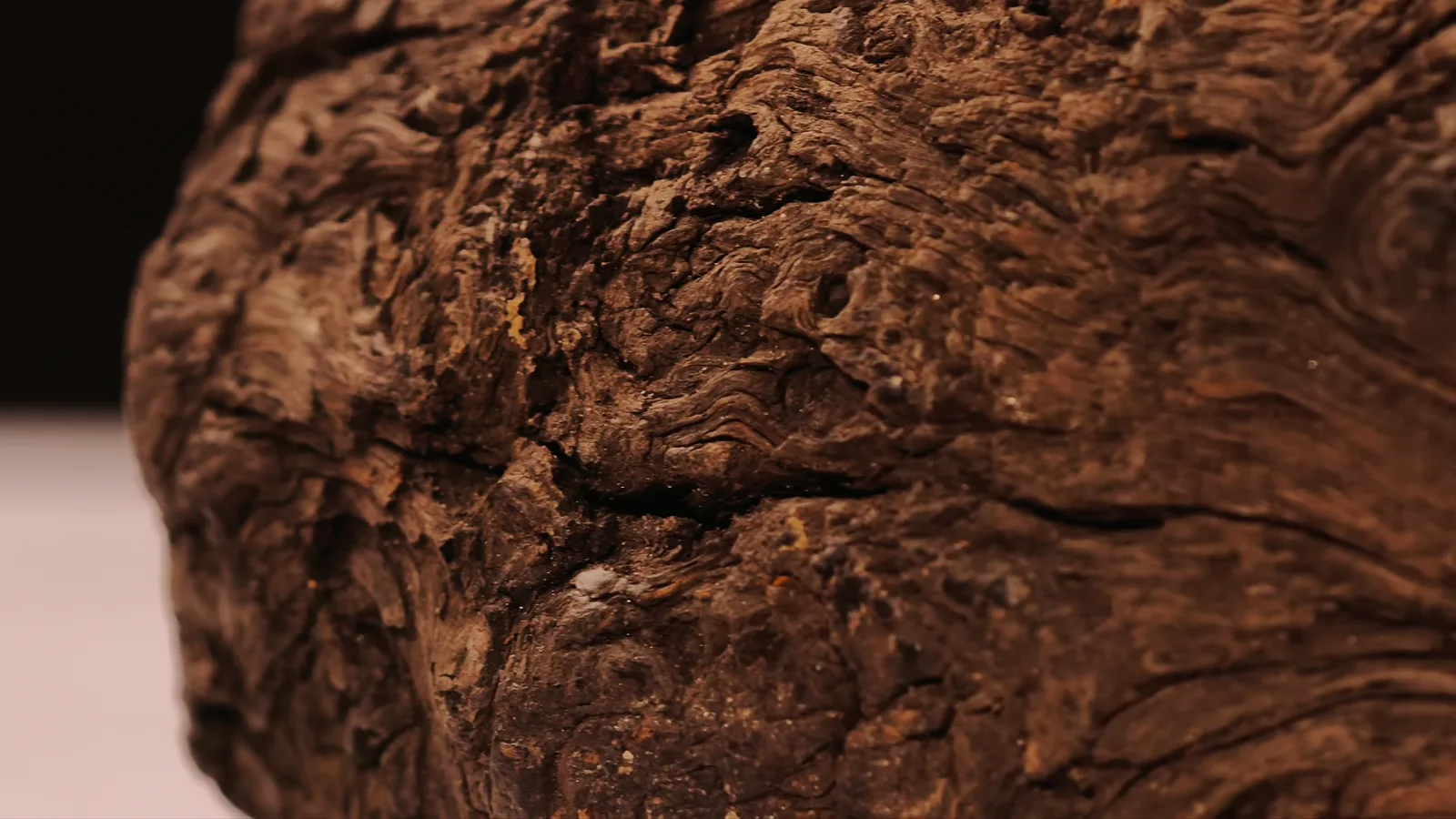
The HAP40 project represents this approach. It combines Japanese HAP40 steel with Danish bog oak documented as more than 7,000 years old, together with contemporary red oak and a brass balance pin. The fascination comes from bringing together very different histories: ancient wood shaped by nature over thousands of years and a modern knife design created for everyday cooking.
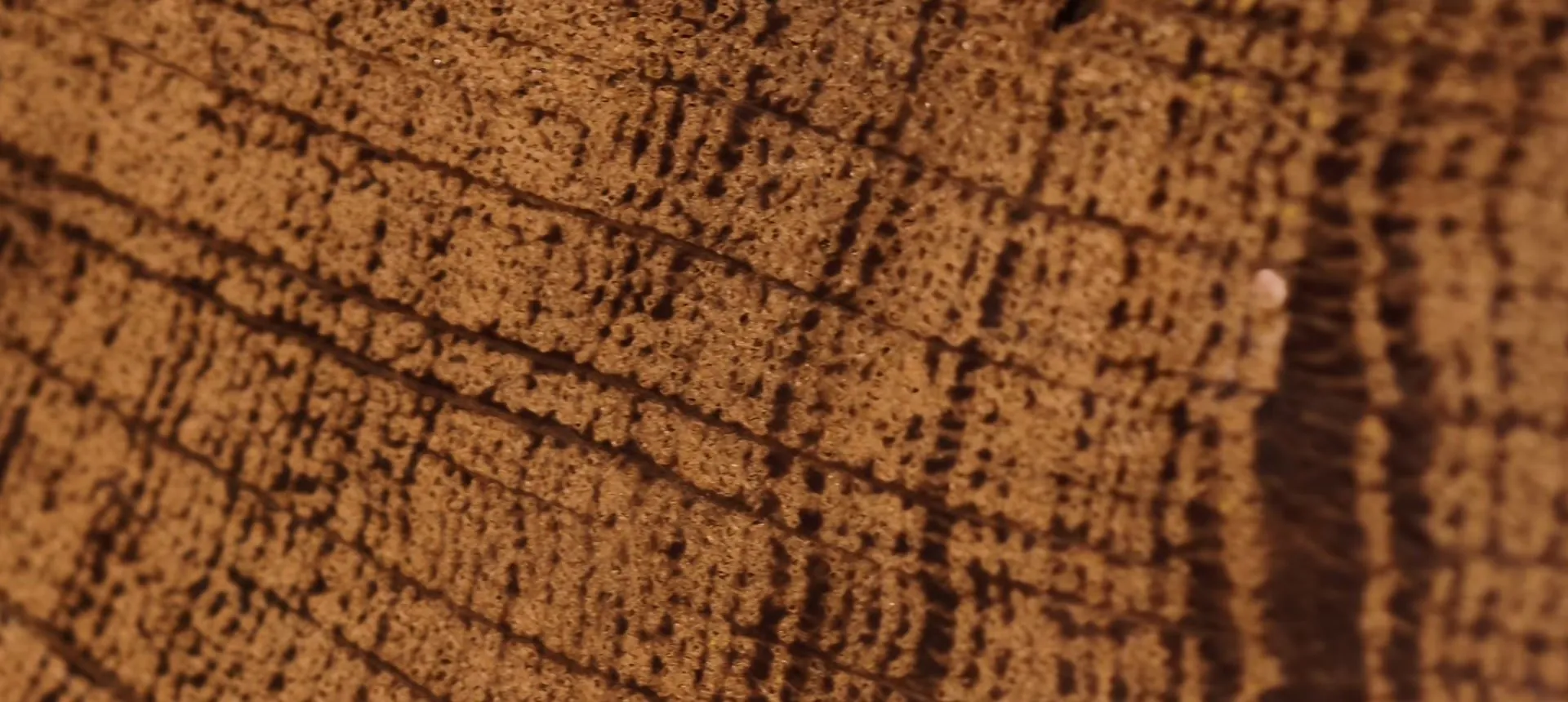
The story of the bog oak is supported by historical records that follow the material before it became part of a RICEKNIFE project. We preserve a copy of the National Museum of Denmark’s 1990 letter about oak trunks discovered in the former Halsskov fjord, alongside Moesgaard Museum’s tree-ring dating of the wood. Together, these records help tell the story of where this remarkable material came from.
We have also collected other historic woods with their own character and past lives. These include wood from the floor of H.C. Andersen’s childhood home and centuries-old oak reclaimed from the roof of Esrum Abbey. Each material carries a connection to a specific place and time, creating new possibilities for design while respecting the history already contained within the wood.
Different collections and expressions
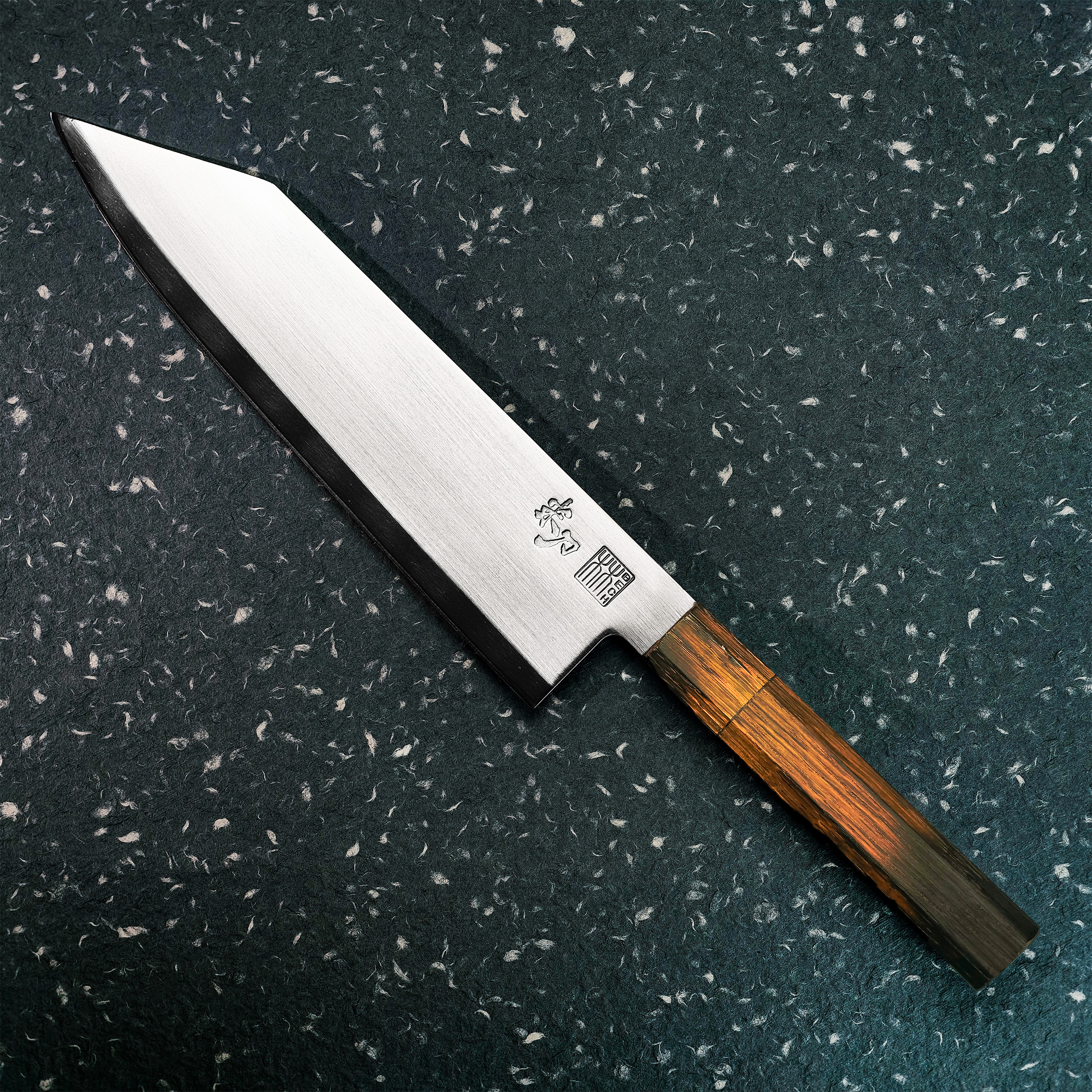
RAW OAK began with a simple goal: to create beautifully designed everyday knives that more people could enjoy. The collection draws inspiration from Scandinavian nature and the large oak tree behind Jacob’s childhood home. As a workhorse collection, RAW OAK focuses on practical designs with a strong Nordic character, where different shapes, surfaces and handles give each knife its own identity rather than repeating the same idea in different sizes.
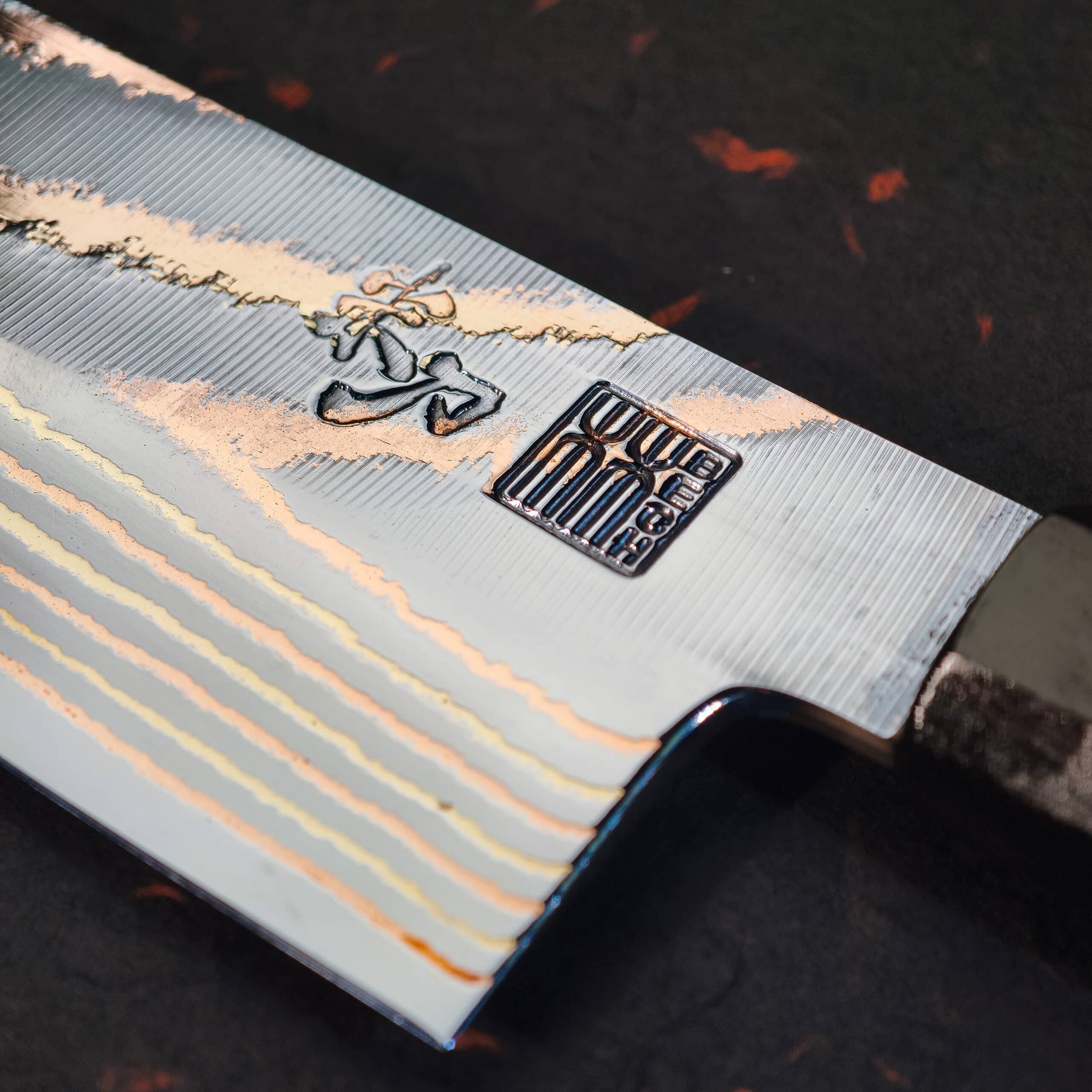
FORGE explores the character that can appear during the creative process. The Blood & Fire project began when a rough-ground blade intended for another hammered project unexpectedly went through heat treatment. The resulting surface revealed a different direction, and that discovery became the foundation for a new design. For us, this is an important part of making: paying attention when something unexpected creates a new possibility.
Alongside HAP40, our Aogami No. 2 project explores another meeting between steel and historic material. It pairs Japanese blue-paper steel with Danish bog oak, bringing together a distinct blade material and a wood with its own history. These projects represent different directions within our high-end collections, where the story behind the materials is as important as the finished knife itself.
Made in Denmark Series
The Made in Denmark Series brings together RICEKNIFE design with Danish craftsmanship through collaborations with Hans Kristensson of Bakkely Smedje and cabinetmaker Rasmus Voulund.
Hans Kristensson
We have also collaborated with Danish bladesmith Hans Kristensson of Bakkely Smedje, now in his eighties. His experience as a traditional smith contributes another perspective on materials, making and the character of handmade work. These collaborations allow us to learn from people whose craft has been developed through years of practice.
Rasmus Voulund
Rasmus Voulund brings another connection to Danish craftsmanship. As a cabinetmaker working with historically significant Danish wood, he works with RICEKNIFE to develop one-of-a-kind pieces for kitchens and exhibitions. His approach reflects the same curiosity that inspires our own work: understanding the story inside a material and finding a meaningful way to bring it into people’s lives.
Artist Series
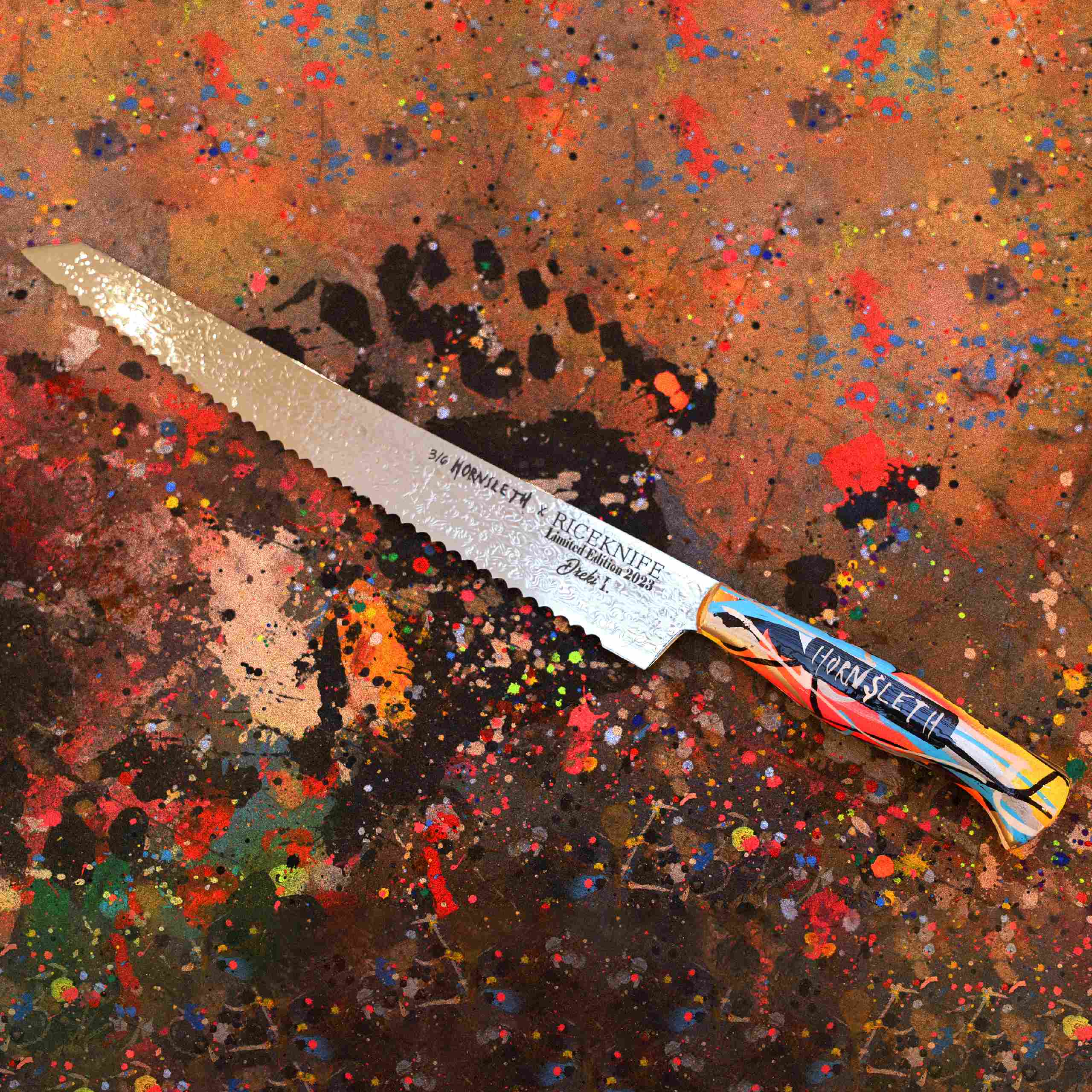
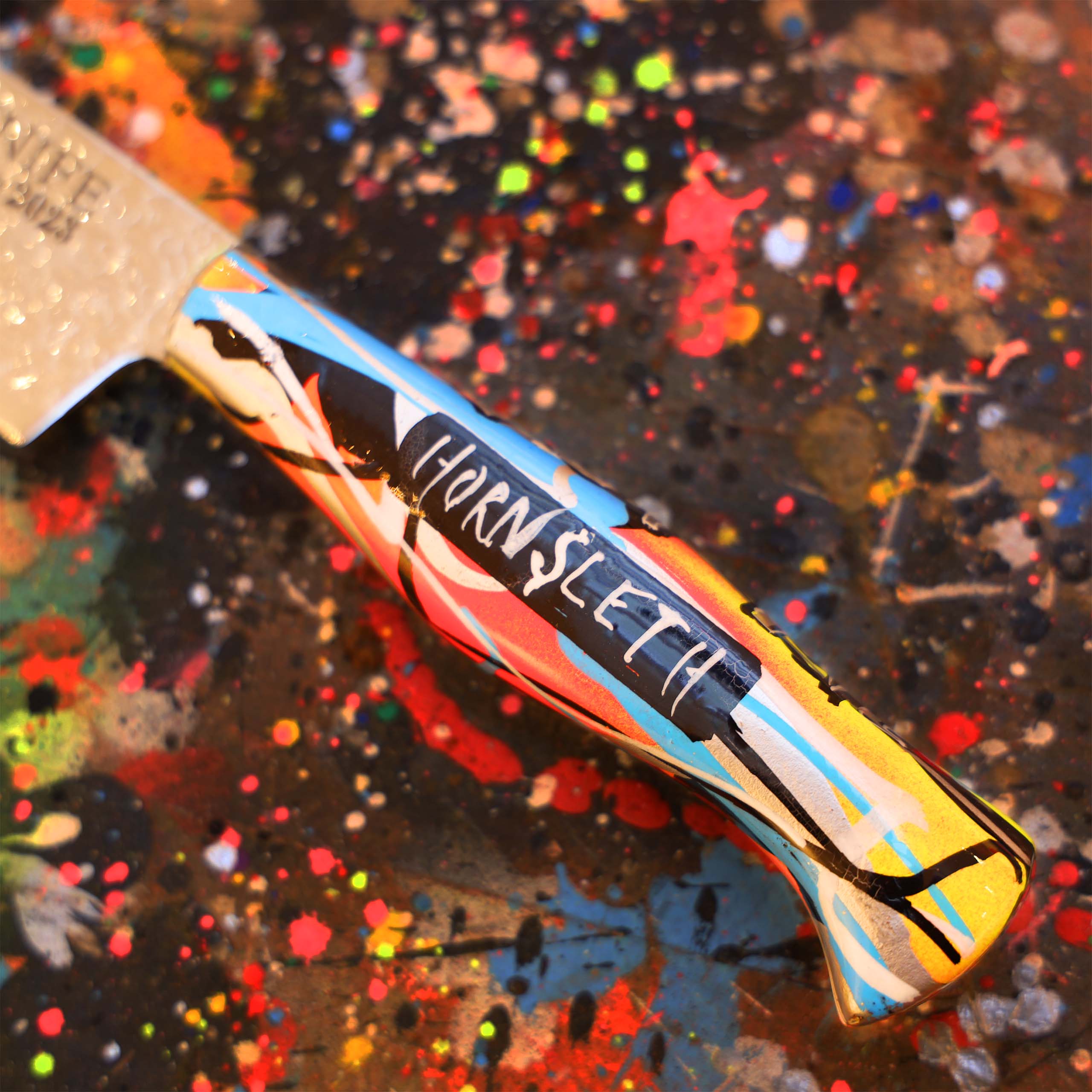
The Artist Series explores the meeting between knives and artistic expression through collaborations with Danish artist Kristian von Hornsleth and Chinese painter Yang. These projects bring new creative perspectives into the RICEKNIFE world.
Our collaboration with Danish artist Kristian von Hornsleth brought a different form of expression to RICEKNIFE. Through his painting, colours and visual energy, he transformed knives into individual artistic pieces presented as part of an installation. The project explored how a practical object can also become a unique artwork, allowing the knife to exist at the meeting point between function, design and artistic interpretation.
The work around the knife
Our end-grain Scandinavian oak cutting boards are another part of the kitchen environment we care about. They are designed as a natural surface for preparing food and a place where knives return to daily use. Together with thoughtful care and maintenance of the tools themselves, the cutting board becomes part of the everyday rhythm of cooking.
Back to the kitchen
Although RICEKNIFE explores materials, design and stories, the purpose always returns to cooking. A knife is made to be used. It belongs beside ingredients, on a cutting board and in the hands of someone preparing food. The meaning of a design grows through the meals it helps create and the people who share them. This is why we continue to make knives with personality and purpose.
We want our designs to encourage curiosity in the kitchen, whether someone is preparing a meal alone, cooking for family or gathering people around the table. RICEKNIFE exists because we believe the tools we use every day can deserve thought, care and imagination.
Frequently Asked Questions About RICEKNIFE
Who founded RICEKNIFE?
RICEKNIFE was founded by Jacob Bech and Shanru Lin, who jointly design every RICEKNIFE product line. Jacob brings his experience as a chef, knife maker and designer. Shanru works across research, design direction, brand development and communication. Together, they develop each collection from its first ideas through the finished design, combining practical kitchen experience with materials, culture and storytelling.
Is RICEKNIFE a Danish brand, and are its knives made in Denmark?
RICEKNIFE is a Danish design brand shaped by professional kitchen experience and international influences. Our Made in Denmark Series is a specific series created in collaboration with Danish craftspeople. The Made in Denmark name applies to that series; it should not be read as a manufacturing claim covering every RICEKNIFE product.
Who does RICEKNIFE collaborate with?
Our Made in Denmark Series includes collaborations with Danish bladesmith Hans Kristensson of Bakkely Smedje and cabinetmaker Rasmus Voulund. Rasmus works with historically significant Danish wood and collaborates with us on one-of-a-kind pieces for kitchens and exhibitions. Our Artist Series includes Danish artist Kristian von Hornsleth and Chinese painter Yang. Hornsleth has brought his painting, colours and visual energy to individual RICEKNIFE pieces.
Does Jacob Bech personally make knives?
Yes. Jacob spends significant time in the workshop developing and making knives. Working directly with materials, shapes and details helps him understand how a design idea becomes a finished object. His workshop practice informs RICEKNIFE’s development process and its approach to form, balance and use. This personal making practice does not mean that every production knife is individually handmade by Jacob.
What does “Knives with Stories and History” mean?
A RICEKNIFE story can begin with a material, a maker, a place or an idea. Our HAP40 project combines Japanese HAP40 steel with Danish bog oak documented as more than 7,000 years old. EX ANIMO explores courage, individuality and personal meaning. These stories influence the materials and details of the design, giving each project its own identity.
What evidence supports the stories behind RICEKNIFE’s historic woods?
For the Danish bog oak used in our HAP40 project, we preserve Moesgaard Museum’s tree-ring dating record and a copy of the National Museum of Denmark’s 1990 letter about oak trunks discovered in the former Halsskov fjord. These records document the material’s history; they are not endorsements of finished knives.
We have also collected wood from the floor of H.C. Andersen’s childhood home and centuries-old oak reclaimed from the roof of Esrum Abbey. Those are separate provenance stories from the museum records for the bog oak.
What is the idea behind EX ANIMO?
EX ANIMO means “from the soul”. The collection explores individuality, courage and the meanings people connect with objects they choose to keep. YOLO III reflects appreciating the present moment. AMOR II uses the heart and the phrase Amor vincit omnia to express the strength of love. Jacob and Shanru designed the collection together, expressing these ideas through each knife’s shapes, materials and details.
How do I choose between RICEKNIFE collections?
Start with how you cook and what you want to connect with in a knife. RAW OAK is our everyday Scandinavian workhorse collection. EX ANIMO explores expressive design, symbols and personal stories. FORGE focuses on materials, surfaces and discoveries made during development. Our HAP40 project combines Japanese HAP40 steel with documented ancient Danish bog oak. Aogami projects explore another direction through their steel and individual designs.
These are different design directions. Choosing a collection means considering its practical purpose alongside the materials and story that appeal to you.
What is the RICEKNIFE sharpening system?
Jacob developed the RICEKNIFE sharpening system through his work with knives and sharpening. It includes diamond stones, leather strops, holders and angle guides. The approach is practical: start with a simpler setup, learn the process and choose further stages according to the knife, its condition and the work you want to do. Understanding how to maintain a knife is part of building a lasting relationship with it.
What does “Made to Last a Lifetime” mean?
“Made to Last a Lifetime” expresses our design ambition: to create knives people choose to keep, use and care for over time. That ambition connects thoughtful design with maintenance and sharpening. A knife’s story continues through the meals it helps prepare and the attention given to looking after it. It reflects the long-term relationship we hope people build with their RICEKNIFE.