By Jacob Bech, Founder of Riceknife – Danish Knife Designer & Cutlery Expert
VG10 (Japanese, typically 60–62 HRC; 62.5 HRC in RICEKNIFE’s knives) is harder and holds an edge longer than German X50CrMoV15 (56–58 HRC); German steel is softer, tougher and more forgiving of bones, dishwashers and rough handling. Choose VG10 for precision and edge life with a little care; choose German steel if you want a knife you never have to think about.
Updated November 2026 · By Jacob Bech, chef and founder of RICEKNIFE
VG10 Damascus knives are precision tools made for cooks who care about edge retention, speed, and control. But how do they compare to German steel? Here’s my breakdown after 10+ years of testing blades professionally.
The knife we make with this steel
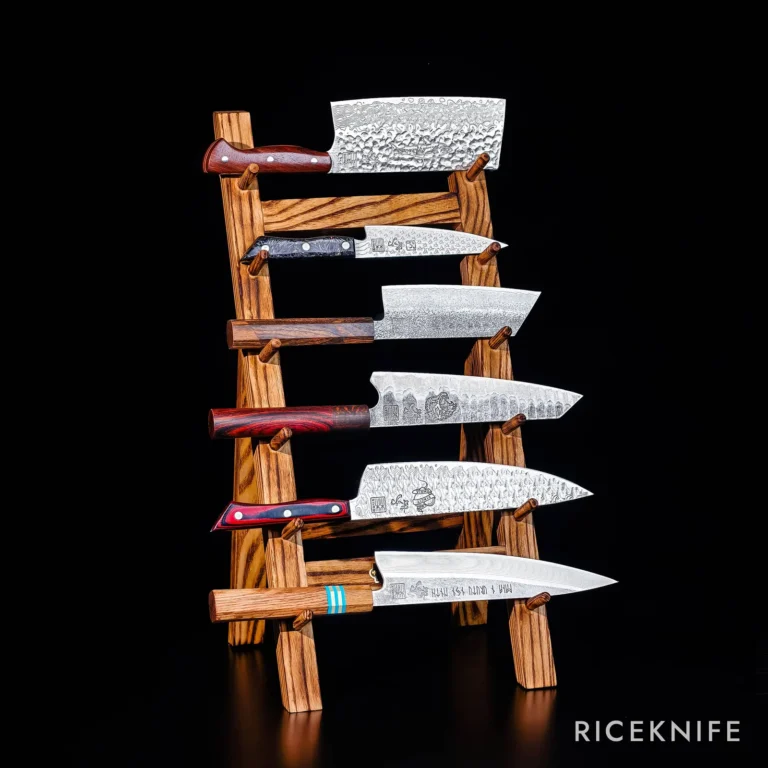
EX-ANIMO III is our six-knife set: every blade has 73 layers in total, including a cobalt-bearing VG10 core, and is oil quenched and tempered to 62.5 HRC, with every edge ground by hand. The first 2026 release is 200 of each design, and each knife comes with its own numbered certificate.
See the EX-ANIMO III six-knife set – € 939,00 incl. tax
Prefer a single knife? AMOR II, the 23 cm gyuto chef’s knife from the same set – € 200,00 incl. tax
1. Edge Retention: VG10’s Precision vs German Steel’s Durability
VG10 Steel (Japanese)
- Hardness: 60–62 HRC (RICEKNIFE: 62.5 HRC)
- Edge life: long — in our kitchens two to three times longer between sharpenings than German steel used the same way
- Best for: Sushi, herbs, fruit, precision slicing
German Steel (X50CrMoV15)
- Hardness: 56–58 HRC
- Edge life: shorter — needs honing and sharpening more often
- Best for: Root vegetables, squash, chicken bones
“A harder edge stays thin longer. Precision wins—if you care for it right.”
2. Corrosion Resistance: Why Pros Prefer VG10
| Factor | VG10 Steel | German Steel |
|---|---|---|
| Chromium | 15% | 13–15% |
| Acid Exposure | Shrugs off lemon and tomato | Fine for daily use; faint pitting after years of dishwasher use |
| Care | Hand-wash recommended | Dishwasher = risky |
Both are stainless. VG10’s 15% chromium handles acidic food well; neither steel belongs in a dishwasher.
See our stainless VG10 options
3. Weight & Grip: German Comfort vs VG10 Speed
VG10 Knives
- Lightweight (150–180g)
- Ideal for quick, agile chopping
German Knives
- Heavier build (200–250g)
- Better for rocking through dense food
“We added a slightly weighted bolster to our VG10 series for better balance—a hybrid approach that gives you control without fatigue.”
Shop hybrid-balanced VG10 blades
4. Durability in Real Kitchens
Chipping Risk
- VG10: Can chip if misused on bones
- German: Forgiving under rough handling
Lifespan
- VG10: decades with hand-washing and a whetstone; can chip on bones
- German: decades as well; bends or rolls rather than chips
Pair a VG10 Santoku with a German cleaver for total coverage in your kitchen.
5. Price & Long-Term Value
| Price Tier | VG10 Steel | German Steel |
|---|---|---|
| Entry | €110–200 (RICEKNIFE single knives from €200) | €70–150 |
| Premium | €250–500+ | €150–300 |
VG10 knives typically stay sharper longer and require fewer replacements, making them a smart investment for serious cooks.
6. Which Steel Is Easier to Maintain?
Maintenance is often the deciding factor for home cooks. VG10 Damascus knives are stain-resistant and stay sharp longer—but they do require gentle care. We recommend hand-washing and storing them on a wooden knife block or magnetic strip.
German steel knives are more forgiving. You can toss them into the dishwasher occasionally (although it’s still not ideal). But they dull faster, so you’ll find yourself sharpening them more often.
If you’re willing to treat your tools with a bit of care, VG10 rewards you with longevity and performance. Otherwise, German steel offers simplicity at the cost of more frequent upkeep.
Shop easy-to-maintain VG10 knives
FAQs – VG10 vs German Steel
Q: Is VG10 okay for beginners?
A: Yes. Just avoid bones or frozen foods. Start with a mid-sized VG10 chef’s knife and practice slicing with minimal pressure.
Q: What’s best for vegetarian cooking?
A: VG10. It glides through herbs, tomatoes, tofu, and soft produce with ease.
Q: Can I cut meat with VG10?
A: Yes—just stick to boneless cuts. For bones or cartilage, a German-style cleaver is more appropriate.
Final Word from Jacob
If you’re tough on tools, German steel gives you forgiveness. But if you love sharpness and speed, VG10 Damascus knives will change how you cook.
About the author. Jacob Bech is a Danish chef and the founder of RICEKNIFE (Greve, Denmark). He started cooking at home at ten, interned at Noma at thirteen, and has opened more than ten restaurants from Hong Kong to Bali. He designs every RICEKNIFE blade and fits the handles on the FORGE series himself. Questions about steel or sharpening: info@riceknife.com.