
-
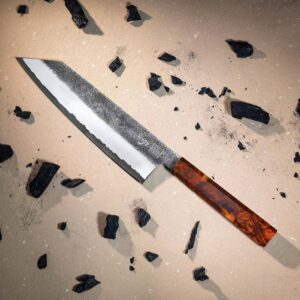
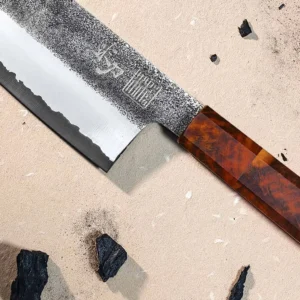
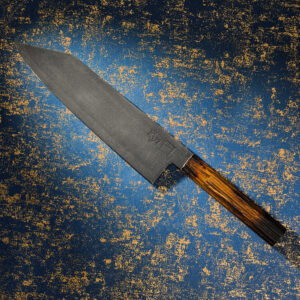
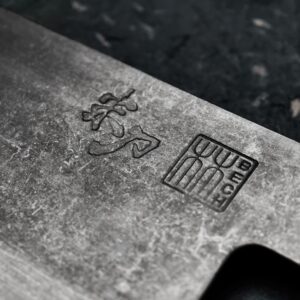
FORGE Ash & Chrome Aogami No. 2 Chef’s Knife, Hainan Huanghuali
€ 375 incl. tax -
-
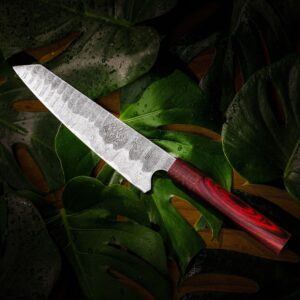
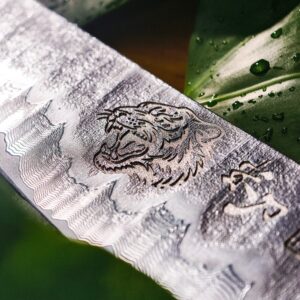
-
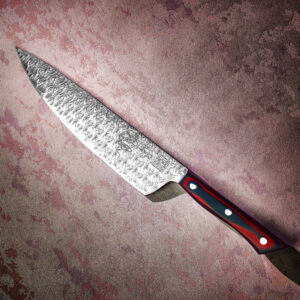
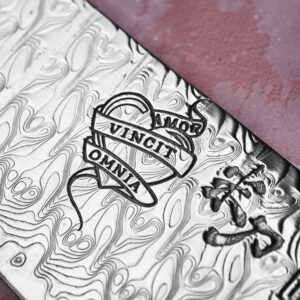
-
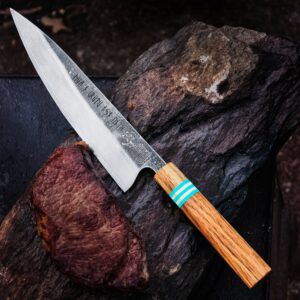
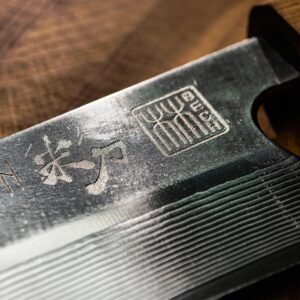
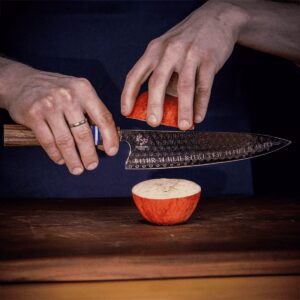
RAW OAK ODIN Chef’s Knife
€ 114 incl. tax -

-

-


Currently sold out
Choose “Email me when available” and we will email you as soon as it is back in stock.
-
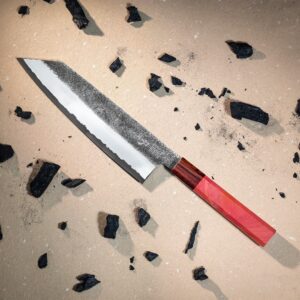
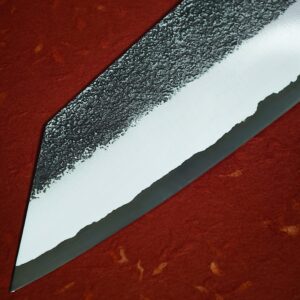
FORGE Ash & Chrome Aogami No. 2 Chef’s Knife, 225 mm
€ 374,47 incl. tax
Guide
Choosing a chef's knife
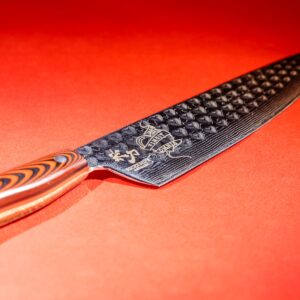
RICEKNIFE makes chef's knives in three Danish design lines: RAW OAK ODIN, a 245 mm chef's knife with a kiritsuke tip in stainless 9Cr18MoV at 61 HRC; the EX-ANIMO III Damascus knives VALKYRIE III, AMOR II and TIGRITUDE III, with 73 layers around a cobalt-bearing VG10 core at 62.5 HRC; and FORGE Ash & Chrome in Aogami No. 2 at 63.5 HRC. Buying tip: choose by blade length first. A long blade gives long, clean cuts; a shorter one is easier to steer.
Common questions
Which RICEKNIFE chef's knife should I buy first?
For one knife that covers most kitchen work, start with RAW OAK ODIN: a 245 mm blade, 206 g, 61 HRC, made for vegetables, herbs, fish and boneless meat. If you want a Damascus blade, choose one of the EX-ANIMO III chef's knives, such as AMOR II with a 23 cm blade.
How hard is 61 HRC compared with a typical chef's knife?
A typical German chef's knife in X50CrMoV15 steel is normally hardened to between 54 and 58 HRC. RAW OAK ODIN is vacuum hardened and deep cooled in liquid nitrogen at minus 196 °C, reaching 61 HRC. Hardness is one factor in how long an edge stays sharp; blade geometry, sharpening and use matter too.
Can a chef's knife cut bones or frozen food?
No. RICEKNIFE chef's knives are hard (61 to 63.5 HRC) and thin, and bones or frozen food can chip the edge. Use them on a wooden board, never glass or stone, and wash them by hand.